

A Key Winter Safety Feature Fayetteville NC Families Trust in the 2026 Hyundai Tucson
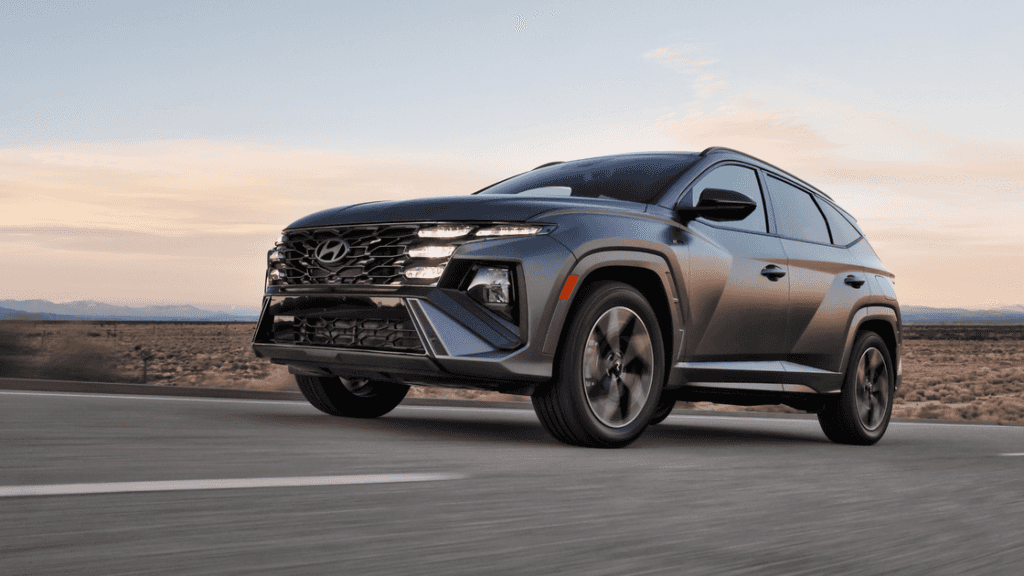
Winter in Fayetteville has a subtle way of testing both patience and pavement. Some mornings begin with nothing more than a thin layer of frost that glitters across windshields before the sun burns it away. Other days bring cold rain that mixes with overnight temperatures and creates pavement that shines with the suspicious gleam of a surface you would rather not trust. The occasional burst of sleet decides to appear out of nowhere and turns school pickup lines into a slow-moving shuffle. Local families know these patterns well, and they also understand that winter in our part of North Carolina is unpredictable enough to demand a vehicle that feels steady when the weather shifts without warning.
That brings us to the 2026 Hyundai Tucson and a feature that Fayetteville drivers continue to bring up during the colder months. Many SUVs position their winter capability as a complex list of systems that seem designed for people who climb mountains for fun. The 2026 Hyundai Tucson takes a different approach. It gives families something practical and reassuring. The feature that stands out is the HTRAC All Wheel Drive system. It is not loud. It does not call attention to itself. It steps in with calm precision whenever the road ahead is questionable. Families trust it because it supports them in the exact moments when winter tries to catch them off guard.
Anyone familiar with winter driving in Fayetteville understands the challenge. The issue is not massive snowdrifts that tower over your car. The issue is the thin layer of ice that hides on neighborhood streets before sunrise. It is the unexpected slick patch at the bottom of a familiar hill. It is the cold rain that freezes just enough overnight to turn the first mile of your commute into a moment of negotiation with nature. Drivers want something that can handle these conditions without demanding extra thought. HTRAC responds instantly when grip changes. It directs power between the front and rear wheels in a controlled and intelligent way. The system works behind the scenes so the driver can simply proceed with confidence.
Picture an early morning that follows a night of freezing rain. The street outside your home looks glossy and quiet. You start the 2026 Hyundai Tucson and begin to roll forward. On many vehicles you would brace for that familiar slip that happens before traction catches up. The 2026 Hyundai Tucson feels different. As the tires meet the cold pavement, the vehicle settles and grips without hesitation. You may not hear anything or feel a sudden jolt. You simply sense that the SUV understands what is happening underneath it. That feeling is what many families describe when they explain why they continue to choose the 2026 Hyundai Tucson for winter months.
As someone who has examined vehicles for many years, I pay attention to how a system behaves in real situations. HTRAC works with anticipation rather than reaction. Instead of waiting until the wheels lose grip, the system monitors and adjusts before the driver ever notices a problem. This creates a feeling of control that is especially valuable when the weather becomes unpredictable. It is the difference between hoping the vehicle can handle the road and knowing that it will.
The 2026 Hyundai Tucson supports this sense of stability with a structure that stays composed when the vehicle makes adjustments. The SUV uses a strong unibody design crafted from high-strength materials. When the system shifts power, the body does not wobble or lean awkwardly. It maintains a smooth and confident posture. This structural integrity enhances the effect of the all-wheel-drive system and creates a unified response that feels natural. The combination of engineering and software works together in a way that simplifies winter driving instead of complicating it.
Beyond the all-wheel-drive system, the 2026 Hyundai Tucson includes a range of safety features that further support winter travel. Forward collision avoidance adds an additional layer of awareness during foggy mornings or icy intersections. Blind spot collision warning assists when visibility is reduced by frost or lingering condensation on side windows. Rear cross traffic collision avoidance becomes especially helpful in busy parking lots where snow spray or slush can limit your view. Lane keeping and lane following systems help guide the vehicle within road markings that can fade during winter storms or become partially covered by debris. All of these technologies contribute to the 2026 Hyundai Tucson’s winter reputation in Fayetteville. They work quietly in the background and create an environment that feels steady even when weather conditions are not cooperative.
Drivers also appreciate the comfort features designed to make winter easier. Heated front seats provide a quick warm-up during cold commutes. Heated rear seats in certain trims extend that comfort to passengers. Heated side mirrors clear frost more quickly so you can focus on the road. The LED lighting system improves visibility during early sunsets or heavy rain. These conveniences may not be dramatic, but they make winter routines smoother. Each detail matters when temperatures drop and families are trying to navigate busy schedules.
The driving experience itself remains smooth even on rough or icy surfaces. The steering has a reassuring weight that helps the driver feel connected to the road. The suspension absorbs bumps and uneven patches without removing the sense of control. The cabin stays quiet due to thoughtful insulation. These elements create a calm environment that works well with the capabilities of the all-wheel drive system. Winter driving often involves tension and alertness. The 2026 Hyundai Tucson reduces that tension by creating a balanced and composed feel throughout the drive.
When comparing the 2026 Hyundai Tucson to other compact SUVs, the distinction becomes clear. Many vehicles claim winter capability. Some offer systems that are slow to react. Others require the driver to manually activate certain settings. A number of models rely on outdated traction systems that perform inconsistently in mixed conditions. The 2026 Hyundai Tucson stands apart because its winter strength comes from the blend of responsive traction, structural stability, and intelligent assistance features. It does not try to overwhelm drivers with too many layers of complexity. Instead, it presents a simple and reliable approach that families can trust.
Fayetteville drivers appreciate this combination. They recognize that their winters are unpredictable enough to require support but not extreme enough to need specialized equipment. The 2026 Hyundai Tucson fits this environment perfectly. It adapts to slippery intersections, cold rain, and occasional frost without asking the driver to change habits. It simply reacts. That ability to adapt is the quality that keeps families returning to this model every winter.
If you want to experience how the 2026 Hyundai Tucson manages winter roads, you can schedule a test drive at ALM Hyundai Lumberton near Fayetteville, NC. The best way to understand why local families trust this feature is to feel the 2026 Hyundai Tucson’s poise and stability for yourself when the roads are cold and uncertain.
0 comment(s) so far on A Key Winter Safety Feature Fayetteville NC Families Trust in the 2026 Hyundai Tucson