

2026 Hyundai Tucson near Fayetteville, NC
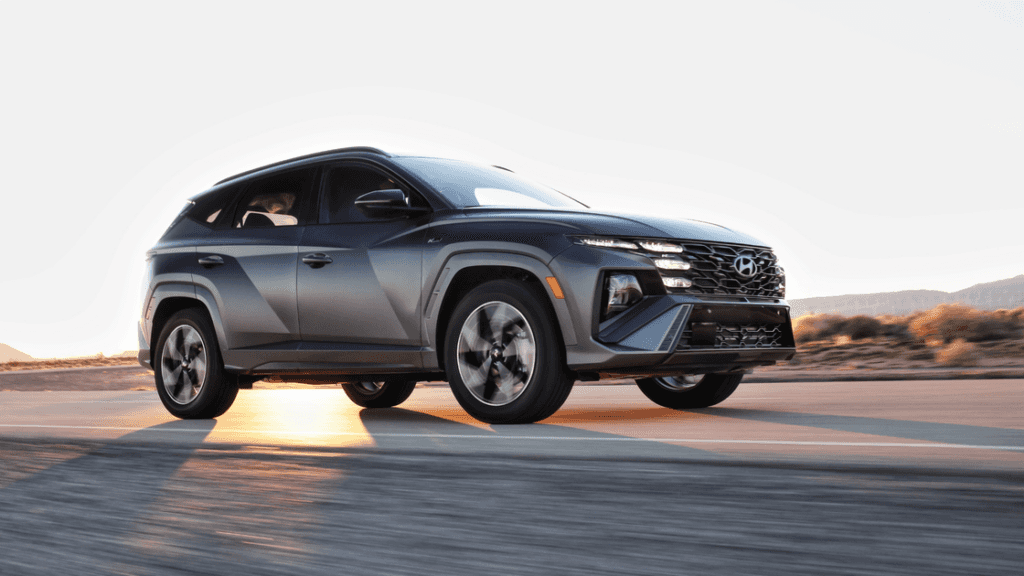
The 2026 Hyundai Tucson presents a fully updated technical structure that focuses on efficiency, capability, and system refinement. The model is offered in multiple configurations that include traditional gasoline, hybrid, and plug-in hybrid variants. Each configuration is built within the Smartstream® engine family and uses a range of mechanical and electronic systems that support consistent performance and balanced control. Through a combination of updated drivetrains, optimized suspension components, extensive safety technology, and modern cabin integrations, the 2026 Hyundai Tucson delivers a streamlined experience designed around function and accuracy.
Powertrain Architecture and Engine Characteristics
The gasoline-powered 2.5-liter engine belongs to the Smartstream® lineup and uses GDI and MPI injection along with a DOHC 16-valve layout. This engine has a displacement of 2,497 cc and features Continuously Variable Valve Timing. Output reaches 187 horsepower at 6100 rpm and 178 pound-feet of torque at 4000 rpm. The compression ratio is 13.0, and the recommended fuel is regular unleaded. Both the block and the head are aluminum, and the engine includes a full cover along with a hood insulator for noise control. Idle Stop and Go is standard on the gasoline configuration to support efficiency during stationary operation. The intake system uses a variable design, and the emissions system meets SULEV30 standards.
The hybrid and plug-in hybrid models use a 1.6-liter Turbo GDI engine with a DOHC 16-valve layout and Continuously Variable Valve Duration. The displacement is 1,598 cc, and this engine also includes a full cover. Output from the gasoline portion of the system reaches 178 horsepower at 5500 rpm and 195 pound-feet of torque across a broad range that begins at 1500 rpm. This configuration uses aluminum construction and a compression ratio of 10.5. Both hybrid systems rely on regular unleaded fuel and comply with SULEV30 emissions requirements.
The electric motor in the hybrid model uses a permanent magnet synchronous design. Combined system output with the gasoline engine reaches 231 horsepower and 271 pound-feet of torque. Power output from the motor alone reaches 47.7 kilowatts and 64 horsepower at 1800 to 2100 rpm with 195 pound-feet of torque at 1700 rpm. The battery is a lithium-ion unit with a maximum voltage of 270 volts and a capacity of 1.49 kilowatt hours.
The plug-in hybrid adds a stronger permanent magnet synchronous motor. Total output rises to 268 horsepower while maintaining the same combined torque rating of 271 pound-feet. The motor-only output reaches 72 kilowatts and 97 horsepower at 2300 to 3600 rpm with 224 pound-feet of torque at 2200 rpm. The lithium-ion battery increases to 360 volts and a capacity of 13.8 kilowatt-hours. Battery power output reaches 88 kilowatts. A charge port is included along with a 7.2-kilowatt onboard charger that can restore capacity in roughly two hours on a 240-volt connection.
Transmission Operation and Drive Systems
The 2.5-liter gasoline models use an eight-speed automatic torque converter transmission. The hybrid and plug-in hybrid models use a six-speed automatic torque converter unit. Drive types vary by configuration. Front-wheel drive is standard on gasoline models, while hybrid and plug-in hybrid versions can be equipped with HTRAC all-wheel drive. Certain models include console-mounted drive modes. Select configurations also include steering wheel-mounted paddle shifters and shift-by-wire operation. Gear ratios differ between engines and drive layouts, with optimized ranges engineered for efficiency and controlled acceleration. Final gear ratios vary by configuration, with 3.648 used for the 2.5-liter engine and either 3.320 or 3.367 used for hybrid and plug-in hybrid variants.
Chassis, Steering, and Braking Systems
The braking system uses ventilated discs in the front measuring 325 by 30 millimeters and solid discs in the rear measuring 300 by 10 millimeters. Anti-lock braking integrates Electronic Brake force Distribution and includes four channels and four sensors. Downhill Brake Control and Hillstart Assist Control are standard along with Brake Assist. An electronic parking brake with automatic vehicle hold is also included.
Steering uses a column-mounted motor-driven power steering system with a rack and pinion layout. The overall steering ratio is 13.7 to 1 with 2.41 turns lock to lock. The turning diameter curb to curb is 38.6 feet. These specifications support predictable low-speed maneuvering and consistent directional response.
The suspension structure features a MacPherson® strut front system with coil springs and gas-pressurized shock absorbers. The rear uses a multi-link design with gas-pressurized shock absorbers. Stabilizer bars are included on both ends. The body uses a unibody structure with extensive use of advanced high-strength steel and high-tensile steel.
Exterior Functional Components and Structural Features
Wheel availability varies among trims, with 17-inch, 18-inch, and 19-inch alloy options offered. Tire specifications adjust accordingly, and models include either a compact temporary tire or a tire mobility kit depending on configuration. Lighting equipment includes Bi LED headlights, LED front turn signals, LED daytime running lights, LED taillights, automatic headlights, and High Beam Assist. Premium daytime running lights appear on select trims.
Mirror equipment includes body-colored housings, heating capability on most trims, available turn signal indicators, and built-in indicators for Blind Spot Collision Warning and Rear Cross Traffic Collision Avoidance Assist. Exterior moldings include body-colored bumpers, dark chrome accent grilles on select trims, chrome or gloss black window moldings, and body-colored door handles.
Glass features include privacy glass for rear sections on most trims along with solar glass and an acoustic laminated windshield. Some configurations add laminated front-side windows for noise control. Exterior features include variable front wipers, aero wipers, a roof-mounted stop lamp, an integrated rear spoiler, an available power sunroof, an available panoramic sunroof, roof side rails, roof cross rails, trailer pre-wiring, and an available tow hitch.
Interior Layout, Seating Systems, and Cabin Materials
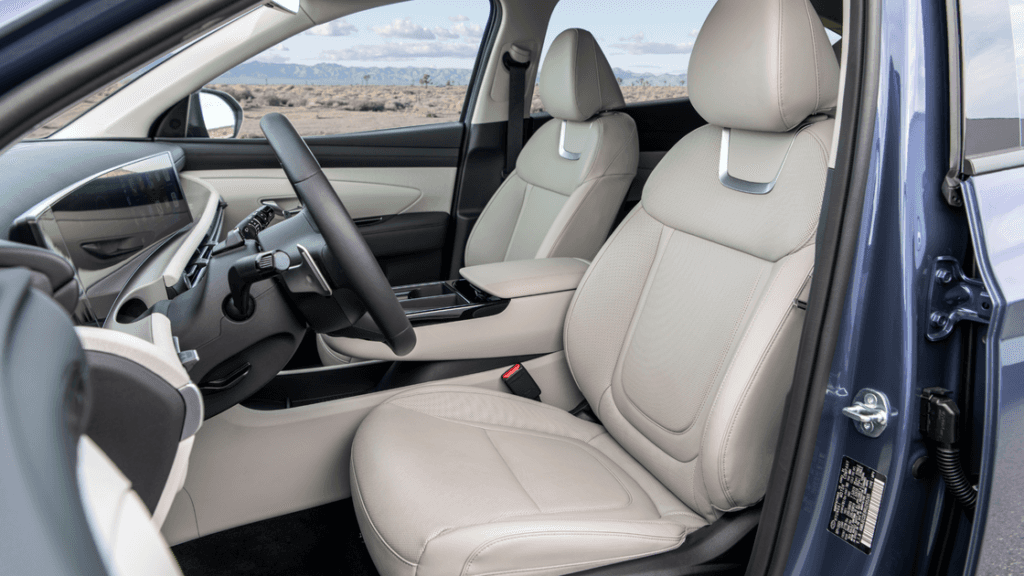
The cabin seats five and offers cloth, H-Tex®, or leather surfaces depending on trim. Driver seating begins with a six-way manual configuration and advances to an eight-way power version with power lumbar support on higher trims. Some versions add an eight-way power passenger seat, ventilated front seats, heated front seats, heated rear seats, and an Integrated Memory System for the driver seat and outside mirrors. Rear seating includes a 60/40 folding and reclining design with adjustable head restraints. Remote release folding is accessible from the cargo area. A dual-level cargo floor is available on all but plug-in hybrid models.
Interior trim elements include metal paint door handles, illuminated sunvisors, leather shift knobs on select versions, carpeted floor mats as accessories, retractable cargo covers, cargo tie-down anchors, and bag hooks. Cabin climate features include manual air conditioning on the SE trim and dual automatic temperature control with auto defogger on other versions. After Blow logic, rear heater ducts, rear AC vents on gas models with appropriate trim, and a cabin air filter are included.
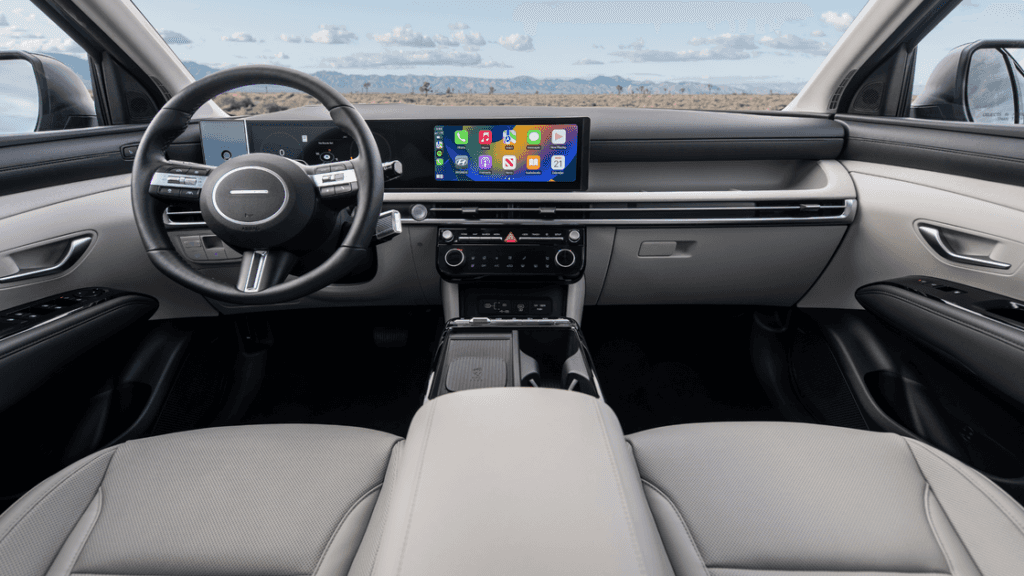
The steering wheel includes audio controls, Bluetooth® controls, cruise control buttons, tilt and telescoping adjustment, and optional leather wrapping. Heated steering capability appears on the Limited trim. Instrument clusters include a 4.2-inch multi-information display or a 12.3-inch digital cluster. Standard gauges include speedometer, tachometer, coolant temperature, and fuel level indicators along with multiple warning and system displays.
Multimedia Systems, Connectivity Features, and Cabin Electronics
The media system includes a 12.3-inch color touchscreen with AM/FM, HD Radio™, SiriusXM®, and six speakers. Wireless Apple CarPlay® and Android Auto™ are standard. Some trims add onboard navigation, Bose® premium audio with an eight-speaker layout, and dynamic voice recognition. Controller and map OTA updates are supported. All trims include dual front USB-C ports with data and charging capability along with dual rear USB-C ports. Additional features include a rearview camera, Bluelink®+ connectivity, Hyundai Pay on specific trims, LED interior lighting, ambient lighting on select models, Hyundai Digital Key 2 technology on selected configurations, and wireless device charging capability on upper trims.
Safety Structures and Driver Assistance Technologies
The safety system includes advanced front airbags, front side airbags, rear side airbags, and side curtain airbags with rollover sensors. Seatbelt systems include pretensioners, load limiters, adjustable anchors, and three-point belts for all positions. Child safety features include LATCH anchors and child door locks. Passive security includes an immobilizer and integrated anti-theft system.
Active systems include Forward Collision Avoidance Assist with pedestrian, cyclist, and junction turning detection; Blind Spot Collision Warning, Rear Cross Traffic Collision Avoidance Assist, Driver Attention Warning, Lane Keeping Assist, Lane Following Assist, steering wheel haptic feedback for lane and blind spot interventions; Intelligent Speed Limit Assist, Safe Exit Warning, and Rear Occupant Alert or Advanced Rear Occupant Alert depending on trim. Higher trims add Parking Collision Avoidance Assist Reverse, Parking Distance Warning for multiple directions, Surround View Monitor, Blind Spot View Monitor, Highway Driving Assist 1, and Navigation-based Smart Cruise Control with Curve Control.
Dimensional Specifications and Capacity Measurements
The exterior measurements include a wheelbase of 108.5 inches, an overall length of 182.7 inches, a width of 73.4 inches, and a height ranging from 65.6 to 66.3 inches depending on the drive layout. Ground clearance measures 7.1 inches on two-wheel-drive models and 8.3 inches on all-wheel-drive versions. The coefficient of drag is 0.33, and the roof rail load capacity reaches 220 pounds.
Interior headroom reaches up to 40.1 inches in front and up to 39.5 inches in the rear depending on roof configuration. Legroom measures 41.4 inches in the front and either 41.3 or 39.5 inches in the rear, depending on the model. Passenger volume reaches up to 108.2 cubic feet on gasoline models. Cargo capacity with seats up reaches 41.2 cubic feet on gasoline and hybrid models and 31.9 cubic feet on plug-in hybrid models. Maximum cargo capacity reaches 80.3 cubic feet on gasoline models and 71.8 cubic feet on plug-in hybrid models. Fuel tank capacity ranges from 11.1 gallons on plug-in hybrid models to 14.3 gallons on gasoline versions.
Visit ALM Hyundai Lumberton for a Test Ride
To explore the full capability of the 2026 Hyundai Tucson, we welcome you to schedule a test drive and experience its complete technical structure in motion through ALM Hyundai Lumberton near Fayetteville, NC. A test drive provides an opportunity to examine the performance characteristics of the available engines and the responsiveness of the transmission and steering systems. It also allows you to interact directly with the cabin interfaces and driver assistance features that support daily operation. The range of powertrains can be evaluated based on your preferences for output and efficiency. Our team is ready to assist you with any questions as you explore the engineering that defines the 2026 Hyundai Tucson.