

2027 Hyundai IONIQ 9 near Elizabethtown, NC
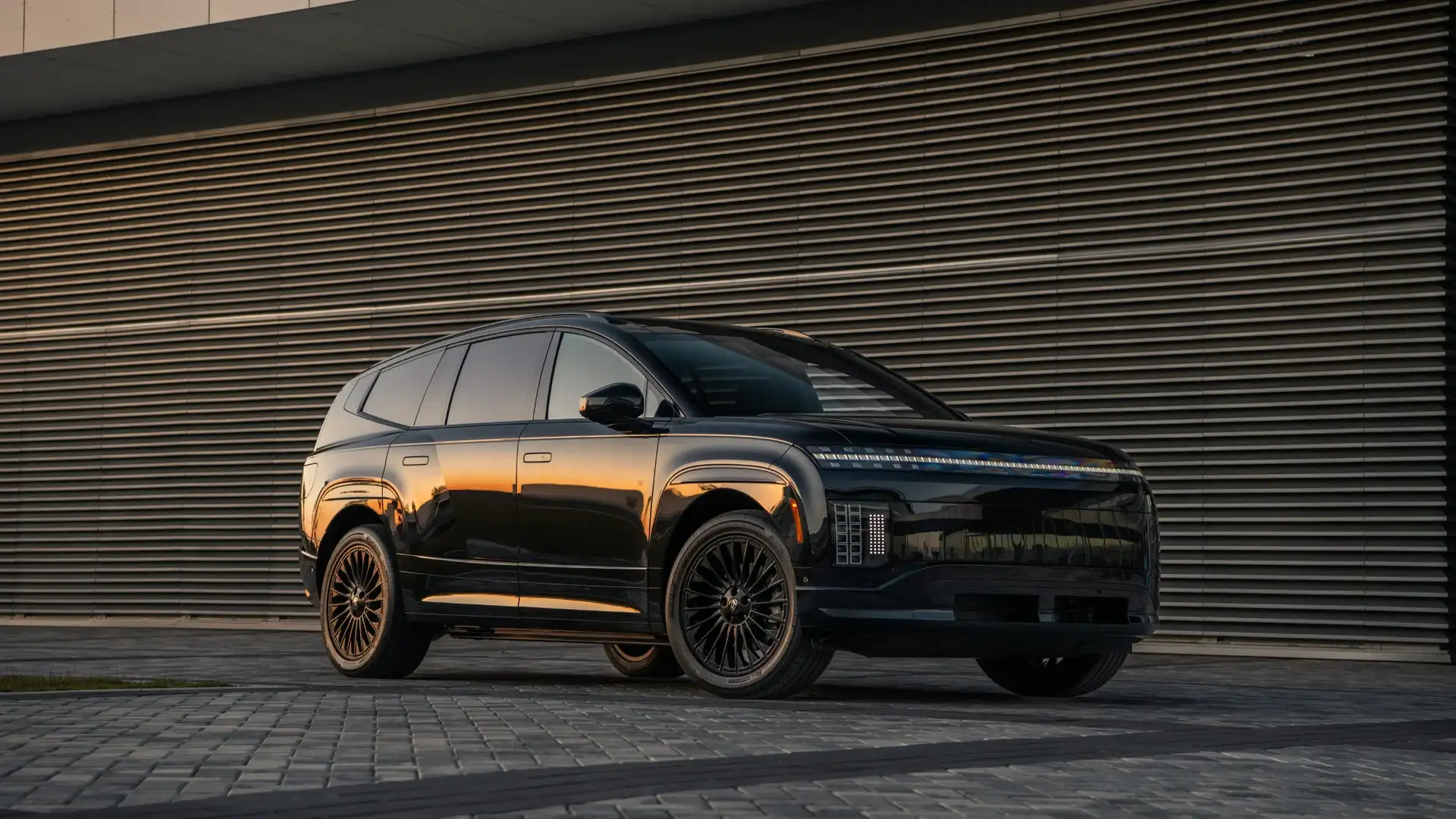
The 2027 Hyundai IONIQ 9 is a three-row electric vehicle available with rear-wheel drive or All-Wheel Drive and seating for six or seven occupants. Its permanent-magnet synchronous motor configurations produce up to 422 horsepower, while a 110.3-kWh lithium-ion battery supports an estimated driving range of up to 335 miles. The vehicle also offers multiple charging options, regenerative braking controls, and five selectable drive modes. Inside, standard dual 12.3-inch displays, three-row climate equipment, connected services, and numerous charging ports support daily operation.
Electric Powertrain, Charging, and Driving Hardware
The 2027 Hyundai IONIQ 9 combines a high-capacity battery with a single-speed reduction gear and rear-wheel-drive or All-Wheel Drive architecture. Three output levels support different combinations of power and estimated driving range. Drivers can select Eco, Normal, Sport, Snow, and My Mode settings through a center-console control. Steering-wheel paddles provide access to the regenerative braking settings. An active hydraulic brake booster integrates regenerative braking with the conventional braking hardware.
Motor Output and Estimated Driving Range
The rear-wheel-drive configuration uses a permanent-magnet synchronous motor that produces 160 kW, equivalent to 215 horsepower, and 350 Nm, or 258 pound-feet, of torque. This configuration provides an estimated all-electric driving range of 335 miles. One All-Wheel Drive configuration produces 226.1 kW, or 303 horsepower, and 605 Nm, or 446 pound-feet, of torque. Its estimated all-electric driving range measures 320 miles. The higher-output All-Wheel Drive system generates 314.6 kW, or 422 horsepower, and 700 Nm, or 516 pound-feet, of torque, with an estimated range of 311 miles.
Every 2027 Hyundai IONIQ 9 uses a 110.3-kWh lithium-ion battery that operates at 610 volts. The rear-wheel-drive system has a 13.16 final gear ratio. All-Wheel Drive models use a 10.65 front ratio and a 13.16 rear ratio. A column-mounted shift-by-wire selector manages the single-speed reduction gear. A battery heating system with a preconditioning function comes standard across the lineup.
Charging Systems and Connections
The 2027 Hyundai IONIQ 9 places its North American Charging Standard port on the passenger-side rear quarter. Charging from 10 to 80 percent takes a stated 40 minutes with a NACS V3 Supercharger. A 350-kW DC fast charger used with a CCS adapter completes the same interval in a stated 24 minutes. A 50-kW DC fast charger used with a CCS adapter requires a stated 109 minutes for the 10-to-80-percent interval. North American Level 2 charging at 240 volts, 48 amps, and 11 kW takes a stated 9 hours and 40 minutes.
A dual-voltage ICCB charging cable comes standard on every trim. The power-operated charge-port door provides convenient access to the charging connection. Bluelink® Remote Charge Access also comes standard as part of the connected-vehicle equipment. Limited and Calligraphy models add a two-way Vehicle-to-Load onboard charger in the cargo area.
Chassis, Braking, Steering, and Exterior Engineering
The 2027 Hyundai IONIQ 9 uses a unibody structure made primarily from advanced high-strength steel and high-tensile steel. Its suspension combines MacPherson® struts at the front with a five-link layout at the rear. Gas dampers support both axles, while rack-mounted motor-driven power steering supplies steering assistance. The body measures 199.2 inches long, 78 inches wide, and 70.5 inches high. A 123.2-inch wheelbase supports the three-row passenger compartment and the vehicle’s overall dimensions.
Steering, Suspension, and Brake Components
The steering system has a 16.02 overall ratio measured at 360 degrees and requires 2.93 turns from lock to lock. Its curb-to-curb turning diameter measures 41 feet. The front suspension uses MacPherson® struts, while the rear suspension employs a multi-link five-link configuration. Front braking hardware consists of 360 x 30-millimeter ventilated discs. The rear axle uses 345 x 20-millimeter ventilated discs.
Four-wheel anti-lock braking works with Electronic Brake-force Distribution and Brake Assist. Vehicle Stability Management operates with Electronic Stability Control and Traction Control. Hillstart Assist Control helps the driver manage the transition from a stop on an incline. An electric parking brake includes Automatic Vehicle Hold for stationary conditions. The Tire Pressure Monitoring System provides an individual pressure indicator for each tire.
Wheels, Aerodynamics, and Exterior Equipment
Wheel specifications vary by trim, beginning with 19 x 8-inch alloy wheels and 255/60R19 tires on the S. The SE receives 20 x 8-inch alloy wheels with 275/50R20 tires. Limited and Calligraphy trims use 21 x 9-inch alloy wheels with 285/45R21 tires. The Limited and standard Calligraphy designs feature five spokes, while the Calligraphy Black Ink configuration uses a turbine-style design. A tire mobility kit comes standard across the model range.
Active air flaps occupy the lower front grille, and automatic flush-type door handles come standard on every trim. The body achieves a lowest listed drag coefficient of 0.269. Aero-style wiper blades and rain-sensing windshield wipers also come standard. Exterior lighting includes automatic LED projector headlights, LED daytime running lights, LED taillights, High Beam Assist, and an LED center high-mount stop lamp. Heated outside mirrors feature LED turn-signal indicators and Blind-Spot Collision-Avoidance Assist, while SEL and higher trims add power-folding operation.
Solar glass covers the windshield and front doors, while acoustic laminated glass extends across the windshield and first- and second-row side windows. An integrated rear spoiler incorporates the center high-mount stop lamp. Every trim includes flush roof side rails and a power liftgate with automatic opening. Limited and Calligraphy models add a panoramic sunroof. Wheel-arch finishes range from non-painted black on S, SE, and SEL trims to a glossy-black and body-color treatment on Limited and a body-color finish on Calligraphy.
Three-Row Comfort, Space, and Utility
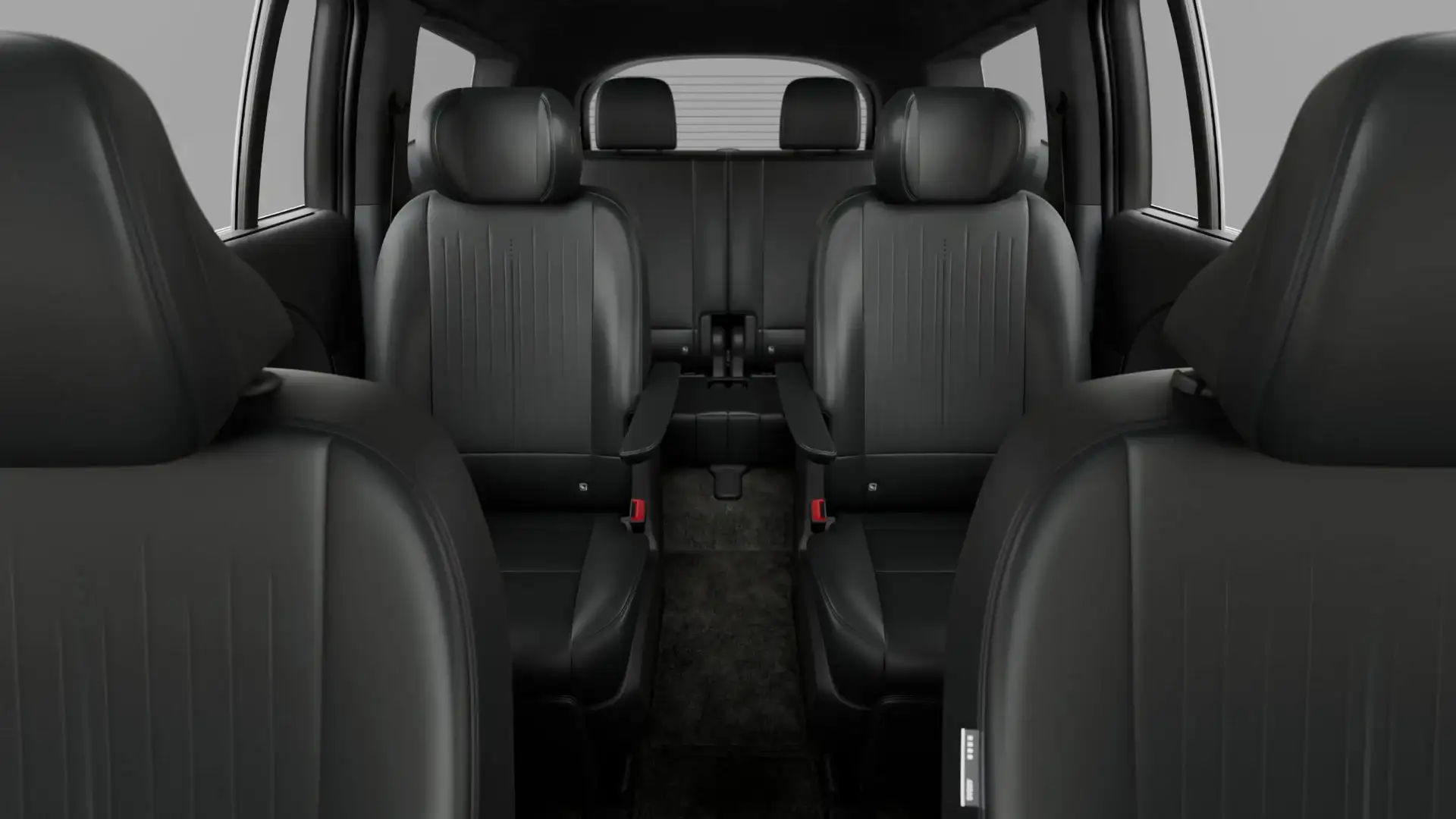
The 2027 Hyundai IONIQ 9 provides a three-row cabin configured for seven passengers in S, SE, and SEL trims or six passengers in Limited and Calligraphy models. Total interior volume measures 185.44 cubic feet, while the seven-passenger layout provides 163.54 cubic feet of passenger volume. Luggage capacity measures 21.9 cubic feet behind the third row, 46.7 cubic feet behind the second row, and 86.9 cubic feet behind the first row. Power-adjustable front seating and dedicated accommodations for the rear rows support passenger comfort.
Seating Configurations and Passenger Dimensions
All trims include an eight-way power driver’s seat, heated front seats, and front seatback pockets. The S provides two-way driver lumbar adjustment, while the SE and SEL include two-way lumbar adjustment for both front occupants. Limited and Calligraphy provide four-way lumbar adjustment for the driver and two-way adjustment for the front passenger. An eight-way power front-passenger seat begins on the SE, and ventilated front seats become standard on SEL and higher trims. Stain-resistant cloth covers the seats in S and SE models, while SEL, Limited, and Calligraphy trims use H-Tex®-trimmed seating.
Limited and Calligraphy models add a driver-seat integrated memory system. These two trims also replace the second-row bench with four-way power captain’s chairs featuring one-touch walk-in operation, wing-type head restraints, and leg rests. They include ventilated second-row seats and a power-folding third row. S, SE, and SEL models use a sliding second-row bench with manual entry assistance and a manually folding third row. Calligraphy further adds heated third-row seats to its six-passenger cabin.
Without the panoramic sunroof, first-, second-, and third-row headroom measures 41.5, 41, and 39.7 inches, respectively. With the sunroof, the corresponding figures measure 39.5, 39.4, and 39.8 inches. First-row legroom measures 41.4 inches, and second-row legroom measures 42.8 inches in both seating configurations. Third-row legroom measures 32 inches in the seven-passenger layout and 31 inches in the six-passenger version. Shoulder room measures 61.4 inches in the first row, 61 inches in the second row, and 55 inches in the third row.
Climate Control and Cabin Convenience
Dual automatic temperature control comes standard throughout the 2027 Hyundai IONIQ 9 lineup. A separate automatic temperature-control system serves the second row. Dedicated air vents supply both the second and third rows. Every trim also includes a heat pump. This climate-control arrangement distributes air throughout all three seating rows.
The center console combines a storage compartment with an armrest, and Limited and Calligraphy versions add a sliding function. Front and rear cupholders, illuminated sliding sun visors, assist grips, and a damped and illuminated glove compartment provide additional convenience. Two 12-volt outlets serve the front cabin and cargo area. Front power windows include automatic up and down operation on every trim, while Calligraphy extends that function to the second row. Proximity key entry, push-button starting, power door locks, and power releases for the hood, liftgate, and charge door also come standard.
The 2027 Hyundai IONIQ 9 has 6.9 inches of minimum ground clearance, a 20.1-degree approach angle, and a 22.9-degree departure angle. Rear-wheel-drive models provide a maximum towing capacity of 3,500 pounds with trailer brakes. All-Wheel Drive configurations increase that capacity to 5,000 pounds with trailer brakes. Curb weight ranges from 5,507 pounds for the S to 6,008 pounds for the Calligraphy. Gross vehicle weight rating measures 6,900 pounds for the rear-wheel-drive S and 7,319 pounds for the All-Wheel Drive SE, SEL, Limited, and Calligraphy.
Digital Technology and Safety Systems
Every 2027 Hyundai IONIQ 9 integrates connected infotainment, digital instrumentation, and a broad collection of driver-assistance features. The standard technology package supports navigation, smartphone connectivity, vehicle information, and remote charging access. Camera-based and radar-based systems contribute to monitoring around the vehicle. Upper trims add several viewing and parking technologies beyond the standard equipment.
Displays, Connectivity, and Audio
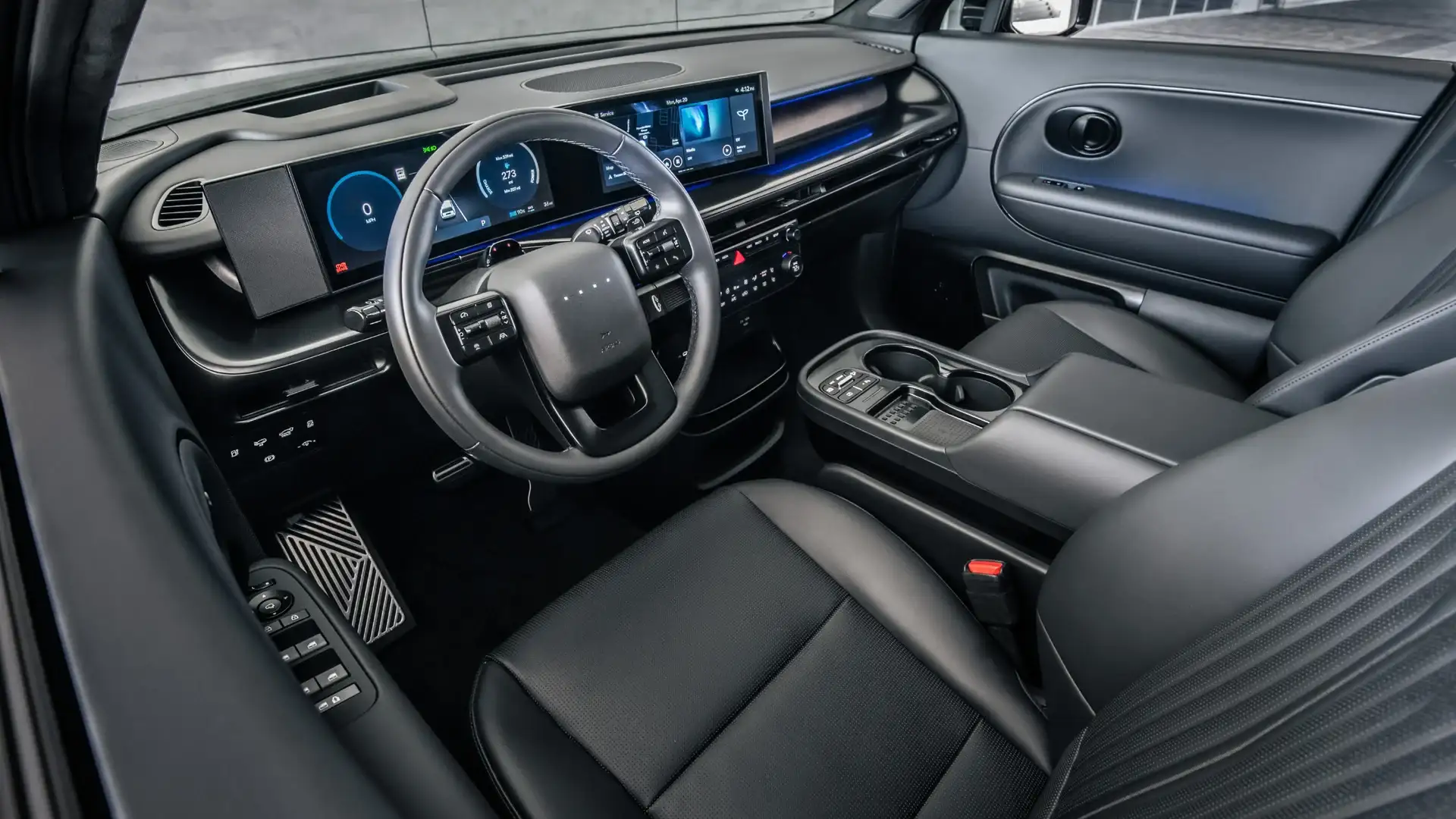
A 12.3-inch ccNC navigation system comes standard with SiriusXM® satellite radio, HD Radio®, over-the-air updates, and a Wi-Fi hotspot. Wireless Android Auto™ and Apple CarPlay® provide smartphone integration without requiring a cable. Bluetooth® Multiple Device Connection supports multiple paired devices. Seven USB-C ports serve the cabin, with three in the first row, two in the second row, and two in the third row. A wireless phone charger and rearview monitor with parking guidance also come standard.
The driver receives a 12.3-inch digital instrument cluster with a speedometer, power gauge, and charge-level display. The cluster also presents the selected drive mode, ready-to-drive status, regenerative braking level, Smart Cruise Control information, and advanced driver-assistance status. Limited and Calligraphy models add a Bose® premium audio system. Calligraphy includes a 10-inch head-up display and a Full Display Mirror with HomeLink. SEL and Limited models use an auto-dimming electrochromic rearview mirror with HomeLink, while S and SE models have a manual day-and-night mirror.
Bluelink® Connected Car System comes standard on all five trims. Ambient interior lighting begins with the SEL and continues through Limited and Calligraphy. Limited and Calligraphy also include Hyundai Digital Key 2 Premium. Steering-wheel audio controls, cruise controls, and regenerative braking paddles come standard. SEL, Limited, and Calligraphy add a heated steering wheel, while Limited and Calligraphy feature power tilt-and-telescoping adjustment.
Collision Avoidance and Driver Assistance
Standard Forward Collision-Avoidance Assist detects cars, pedestrians, and cyclists and includes junction turning, junction crossing, lane-change oncoming, lane-change side detection, and Evasive Steering Assist functions. Lane Keeping Assist and Lane Following Assist also come standard. Driver Attention Warning and Forward Attention Warning provide additional monitoring functions. Highway Driving Assist 2 and Smart Cruise Control 2 supply further assistance during supported driving conditions. Intelligent Speed Limit Assist and High Beam Assist complete the standard driving-support equipment.
Blind-Spot Collision-Avoidance Assist and Rear Cross-Traffic Collision-Avoidance Assist appear on every 2027 Hyundai IONIQ 9. Standard Parking Distance Warning covers forward and reverse operation. SEL, Limited, and Calligraphy models add side Parking Distance Warning, reverse Parking Collision-Avoidance Assist, a Surround View Monitor, and a Blind-Spot View Monitor. Calligraphy further adds forward and side Parking Collision-Avoidance Assist and Remote Smart Parking Assist 2. Safe Exit Assist provides another standard monitoring function for occupants preparing to leave the vehicle.
All outboard seating positions include three-point seatbelts. Seatbelt pretensioners and load limiters cover the first, second, and third rows, and reminders monitor the driver and all passengers. Adjustable front shoulder-belt anchors, rear child-safety locks, and a power-window lockout button come standard. Advanced Rear Occupant Alert uses a radar-based system on every trim. The instrument cluster also provides warnings for airbags, seatbelts, open doors, battery charge, power steering, headlights, the parking brake, low power, tire pressure, stability control, and anti-lock braking.
Schedule a Test Ride at ALM Hyundai Lumberton
Schedule a test drive at ALM Hyundai Lumberton near Elizabethtown, NC, to experience the 2027 Hyundai IONIQ 9 and its electric powertrain directly. Our team can explain the available motor configurations, estimated driving ranges, charging equipment, seating layouts, and towing capacities. A drive also provides an opportunity to assess three-row comfort, steering response, regenerative braking controls, digital displays, and cabin technology. You can review the standard safety equipment and available camera-based parking systems in operation. Contact us to arrange a visit and examine the configuration that best matches your passenger, cargo, handling, technology, and performance requirements.