

2026 Hyundai Venue near Raeford, NC
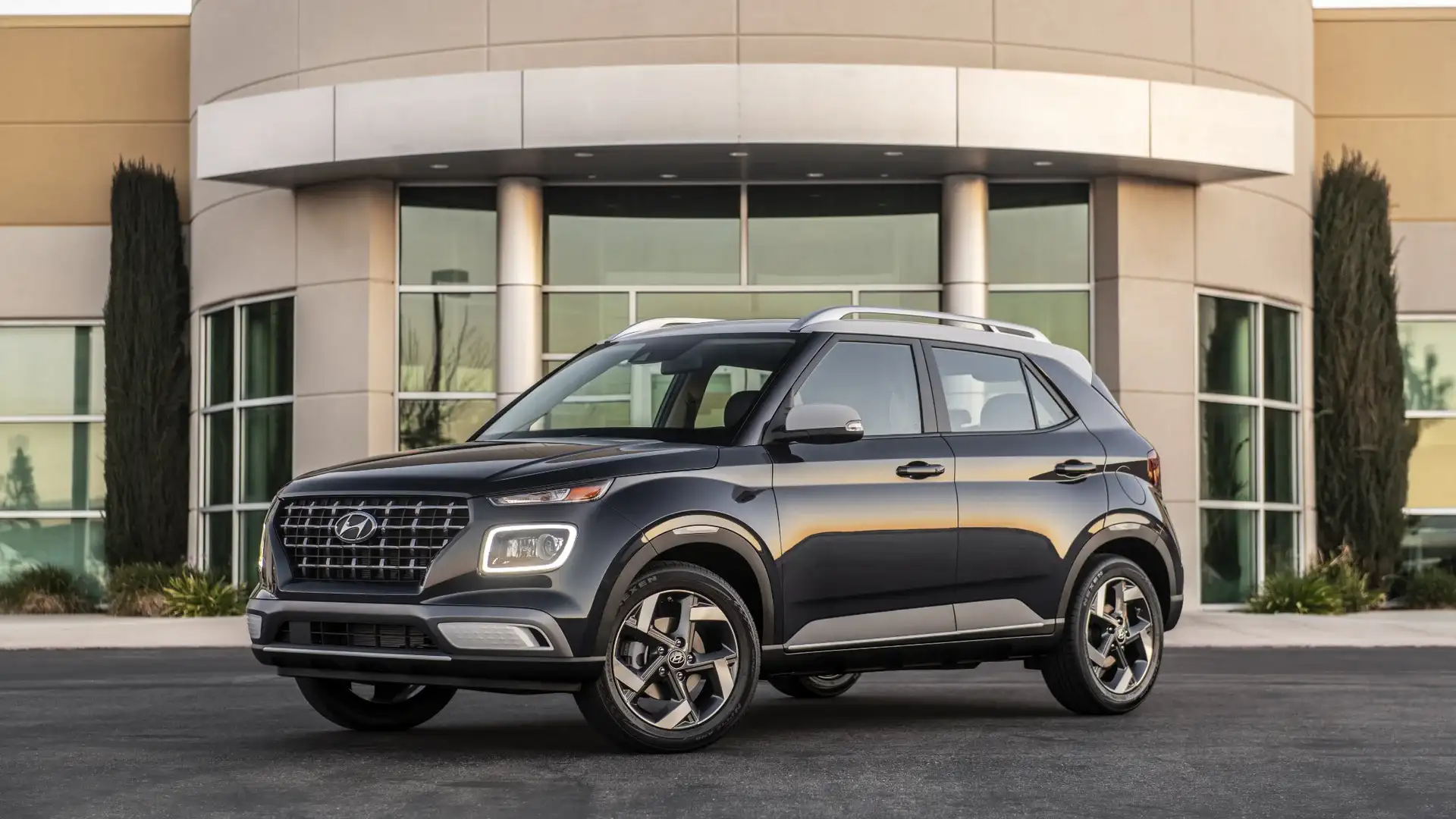
The 2026 Hyundai Venue is engineered as a subcompact crossover with a focus on mechanical simplicity, efficient packaging, and practical technology integration. It uses a unibody structure with high-tensile steel construction, supporting durability while maintaining a controlled curb weight range between 2,612 and 2,738 pounds. The platform supports a five-passenger layout and a front-wheel-drive configuration, with dimensions that prioritize maneuverability in urban conditions. Total length is 159.1 inches, the width is 69.7 inches without mirrors, and the height is 61.6 inches. A wheelbase of 99.2 inches provides balanced interior space distribution. Ground clearance is measured at 6.69 inches, and the coefficient of drag is rated at 0.34.
Precision-Tuned 1.6L Engine Configuration
The 2026 Hyundai Venue is equipped with a Gamma Gen 2 1.6-liter engine with a total displacement of 1,598 cubic centimeters. This powertrain uses a dual overhead camshaft configuration with 16 valves and is mounted transversely. The inline four-cylinder layout incorporates dual-port fuel injection to support controlled fuel delivery across operating conditions. The engine produces 121 horsepower at 6,300 revolutions per minute and generates 113 pound-feet of torque at 4,500 revolutions per minute.
The aluminum block and cylinder head reduce overall engine mass while supporting thermal efficiency. The compression ratio is set at 11.2 to 1, supporting efficient combustion characteristics. Bore and stroke measurements are 75.6 millimeters and 89 millimeters. Mid-phase continuously variable valve timing adjusts valve timing to support engine responsiveness across different load ranges. The exhaust system uses a single-exhaust configuration. The engine operates on unleaded fuel and meets LEV3 ULEV70 emission standards through the use of catalytic converter systems.
Intelligent Variable Transmission and Drive System Design
The drivetrain uses an Intelligent Variable Transmission with SHIFTRONIC® capability. This transmission operates with a continuously variable ratio range, allowing smooth transitions between acceleration phases. The system uses a gate-type shifter configuration and integrates an ignition key interlock system. Hill Start Assist Control is included to maintain vehicle position during incline starts.
The drive configuration is front-wheel drive across all trims. This layout simplifies drivetrain complexity and supports efficient weight distribution for a compact crossover platform. Electrical components associated with the powertrain include an electronic distributor-less ignition system with stick coils, a 12-volt starter rated at 0.9 kilowatts, a 13.5-volt alternator rated at 110 amperes, and a 45 ampere-hour battery.
Steering Geometry and Controlled Handling Systems
The steering system uses a rack-and-pinion configuration with column-mounted motor-driven power steering. This system provides consistent steering assistance and is calibrated for low-speed maneuverability. The overall steering ratio is 14.4 at 360 degrees, and the system requires 2.7 turns from lock to lock. The minimum turning radius is 5.1 meters, which translates to a curb-to-curb turning diameter of 16.6 feet.
The suspension system uses a MacPherson® strut setup at the front with coil springs, a stabilizer bar, and twin-tube gas shock absorbers. The rear suspension uses a coupled torsion beam axle with twin-tube shock absorbers. This configuration is designed for predictable handling and stable ride characteristics during standard driving conditions.
Brake System Construction and Performance Hardware
The braking system of the 2026 Hyundai Venue uses ventilated disc brakes at the front with a diameter of 11.0 inches. Rear braking differs by trim level, with the SE trim using 8.0-inch drum brakes and the SEL trims using 10.3-inch disc brakes. The system includes Anti-lock Braking System functionality with Electronic Brake-force Distribution across all trims. The system uses four wheels and four channels to monitor braking performance.
A vacuum booster with a 10.0-inch diameter supports brake force application, with a boosting ratio of 10.0 to 1. The master cylinder uses a tandem design with a diameter of 0.87 inches. These components are configured to provide consistent braking response and distribution.
Exterior Architecture and Functional Design Elements
The exterior design integrates structural and functional elements without excessive complexity. Wheels and tires vary by trim level. The SE trim uses 15-inch alloy wheels with tire dimensions of 185/65 R15. The SEL trims use 17-inch alloy wheels with tire dimensions of 205/55 R17. A compact temporary spare tire is included with all trims, using a T125/80D15 specification mounted on a steel wheel.
Lighting systems include projector headlights and automatic headlight control. Additional lighting features include one-touch triple turn signals and lenticular-effect taillights. Exterior mirrors are power-adjustable, with heated functionality available on higher trims. Some configurations include roof-color mirror finishes and a power glass sunroof with tilt-and-slide functionality.
The exterior trim includes body-color bumpers, black or chrome grille finishes depending on trim, black window belt moldings, and body-color door handles. Window frames use blackout tape treatment. Tinted glass and a front two-speed intermittent wiper system are standard across trims.
Interior Space Configuration and Seating Engineering
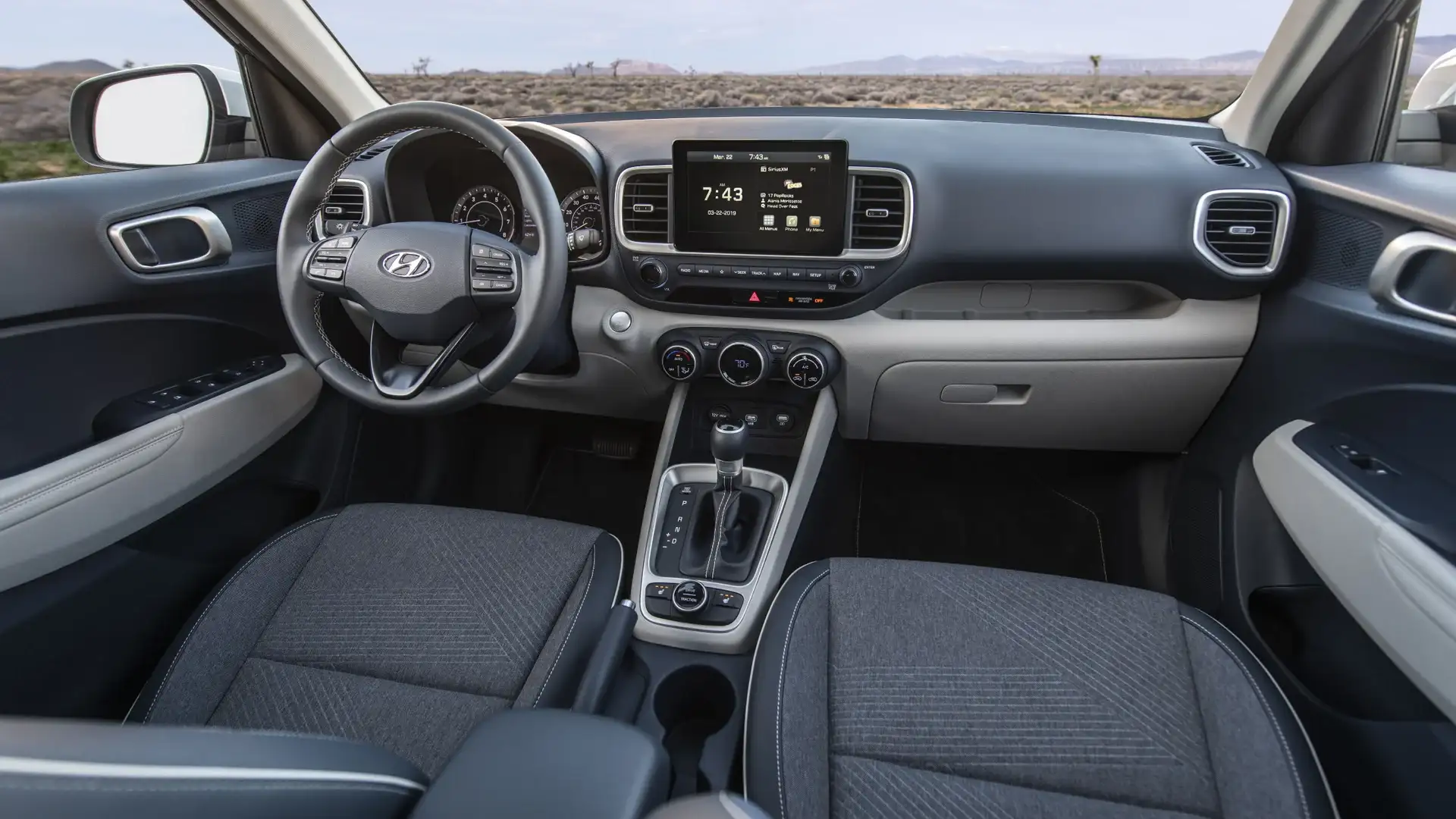
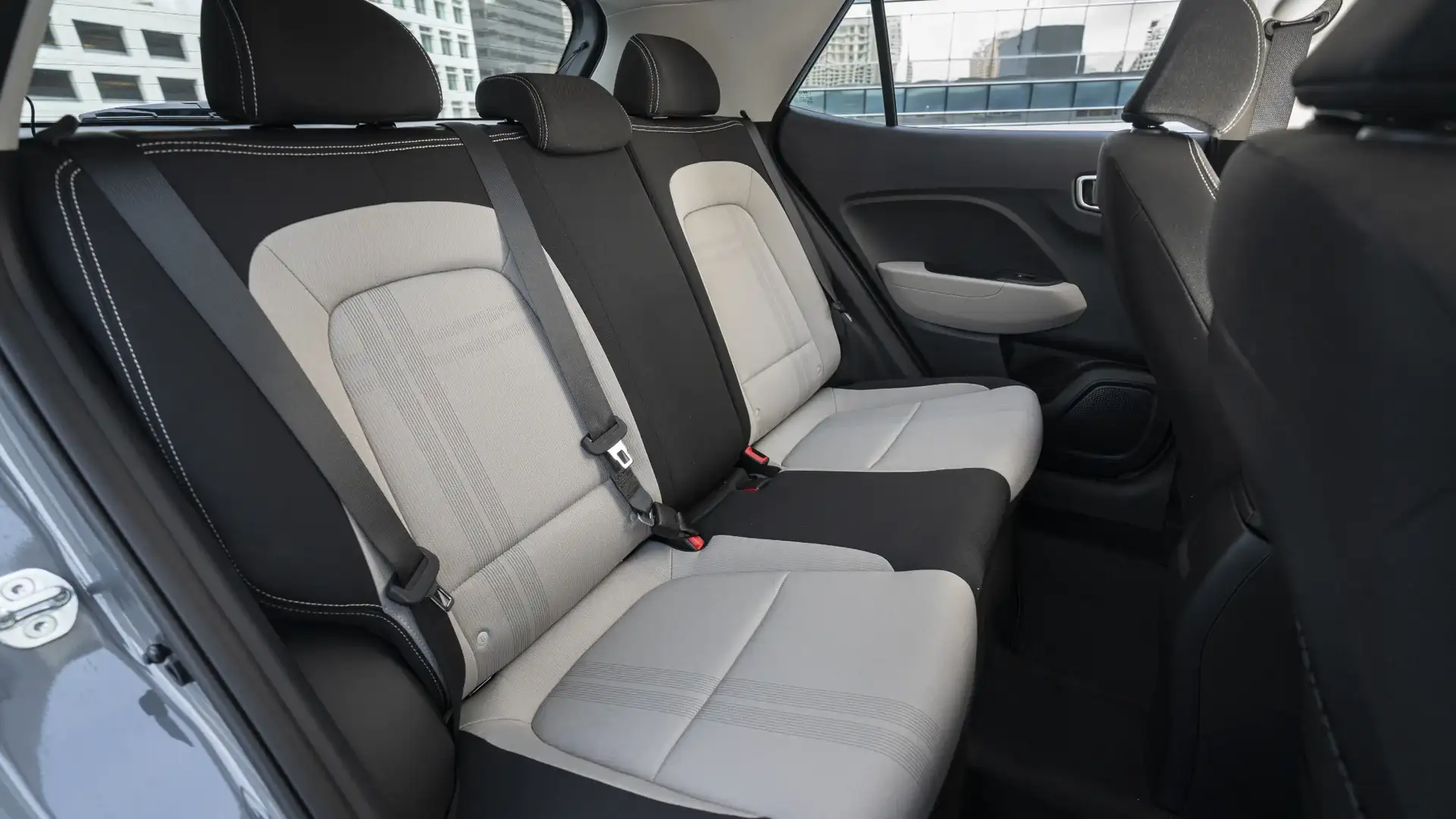
The interior layout of the 2026 Hyundai Venue supports five occupants with defined spatial measurements. Front headroom measures 39.4 inches without a sunroof and 38.4 inches with a sunroof. Rear headroom measures 38.6 inches. Front legroom is 41.3 inches, and rear legroom is 34.3 inches. Shoulder room measures 53.9 inches in the front and 53.7 inches in the rear. Hip room measures 52.1 inches in the front and 43.5 inches in the rear.
The seating system includes cloth upholstery in standard configurations and a cloth and H-Tex® combination in select trims. The driver seat includes six-way adjustability, including height adjustment and sliding and reclining functions. A driver-side sliding armrest with integrated storage is included. The rear seat uses a 60/40 split-folding configuration to expand cargo capacity.
Cargo volume measures 18.7 cubic feet with the rear seats in the upright position. When the rear seats are folded, cargo capacity increases to 31.9 cubic feet. Total interior volume measures 110.6 cubic feet.
Cabin Technology and Connectivity Systems
The infotainment system is centered around an 8-inch touchscreen display. The system includes AM/FM radio functionality and supports wireless Android Auto™ and Apple CarPlay® integration. Bluetooth® hands-free communication with voice recognition is included. Steering-wheel-mounted audio controls provide direct access to system functions.
The audio system uses six speakers, including two tweeters, two front door-mounted speakers, and two rear speakers positioned in the lower panels. USB connectivity includes one Type-A port and one Type-C port. Additional USB Type-C charging ports are available for second-row passengers in higher trims. Wireless device charging using the Qi standard is also available.
The instrument cluster includes multiple gauges and indicators, including a speedometer, tachometer, fuel level, and water temperature. Additional indicators include PRND display, drive mode status, wiper mode, distance to empty, ambient temperature, and odometer readings. Warning indicators include oil pressure, battery charge, door status, airbag system, seatbelt status, tire pressure monitoring, brake system alerts, and stability control indicators.
Climate Control and Interior Utility Features
Climate control systems vary by trim level. The base configuration includes air conditioning, while higher trims include automatic temperature control. All trims include a heater and a positive temperature coefficient heater. A rear window defroster with timer and a cabin air filter are standard.
Interior utility features include power windows for the front and rear, power door locks, cruise control, and a remote keyless entry system with a panic alert and immobilizer in base trims. Higher trims include a proximity key system with push-button start. Additional features include a trip computer that tracks fuel consumption, vehicle speed, elapsed time, and distance metrics.
Storage and convenience elements include a center console with dual cup holders, a 12-volt outlet mounted in the center stack, bottle holders in the front doors, and a glove compartment. Assist grips are positioned for front and rear occupants. The interior also includes map lighting, cargo area lighting, and illuminated switch controls.
Integrated Safety Systems and Driver Assistance Technologies
The safety system includes a comprehensive set of passive and active features. Airbag coverage includes front airbags, side-impact airbags for front occupants, and side curtain airbags for both front and rear passengers. The system includes an occupant classification system for the front passenger seat.
Seatbelt systems use three-point configurations across all seating positions, with emergency locking retractors for the driver and convertible locking retractors for other seats. Front seatbelt pretensioners include electrical activation, buckle sensors, and anchor pretensioners. Rear child safety locks and LATCH anchor systems are included for child seat installation.
The structural safety system includes front and rear crumple zones, body-side reinforcements, and 5-mile-per-hour bumpers. The vehicle also includes a shift interlock system.
Active safety systems include an Anti-lock Braking System, Electronic Brake-force Distribution, Electronic Stability Control with Traction Control System, Vehicle Stability Management, Brake Assist, and a Tire Pressure Monitoring System. Advanced safety technologies include Forward Collision-Avoidance Assist with pedestrian detection, Lane Keeping Assist, Driver Attention Warning, High Beam Assist, and Rear Occupant Alert. Higher trims include Blind-Spot Collision Warning and Rear Cross-Traffic Collision Warning.
Visit ALM Hyundai Lumberton near Raeford, NC
We invite you to explore the 2026 Hyundai Venue through a scheduled test drive to evaluate its 1.6-liter engine performance, Intelligent Variable Transmission operation, and front-wheel-drive handling characteristics. Our team can demonstrate the infotainment system, wireless connectivity features, and driver assistance technologies during a guided drive. You can also review the interior layout, seating adjustments, and cargo configurations directly. Visit ALM Hyundai Lumberton near Raeford, NC, to examine the specifications and experience how each system functions during operation. Schedule your test drive to assess steering response, braking performance, and overall vehicle control in a controlled setting.