

2026 Hyundai Sonata near Raeford, NC
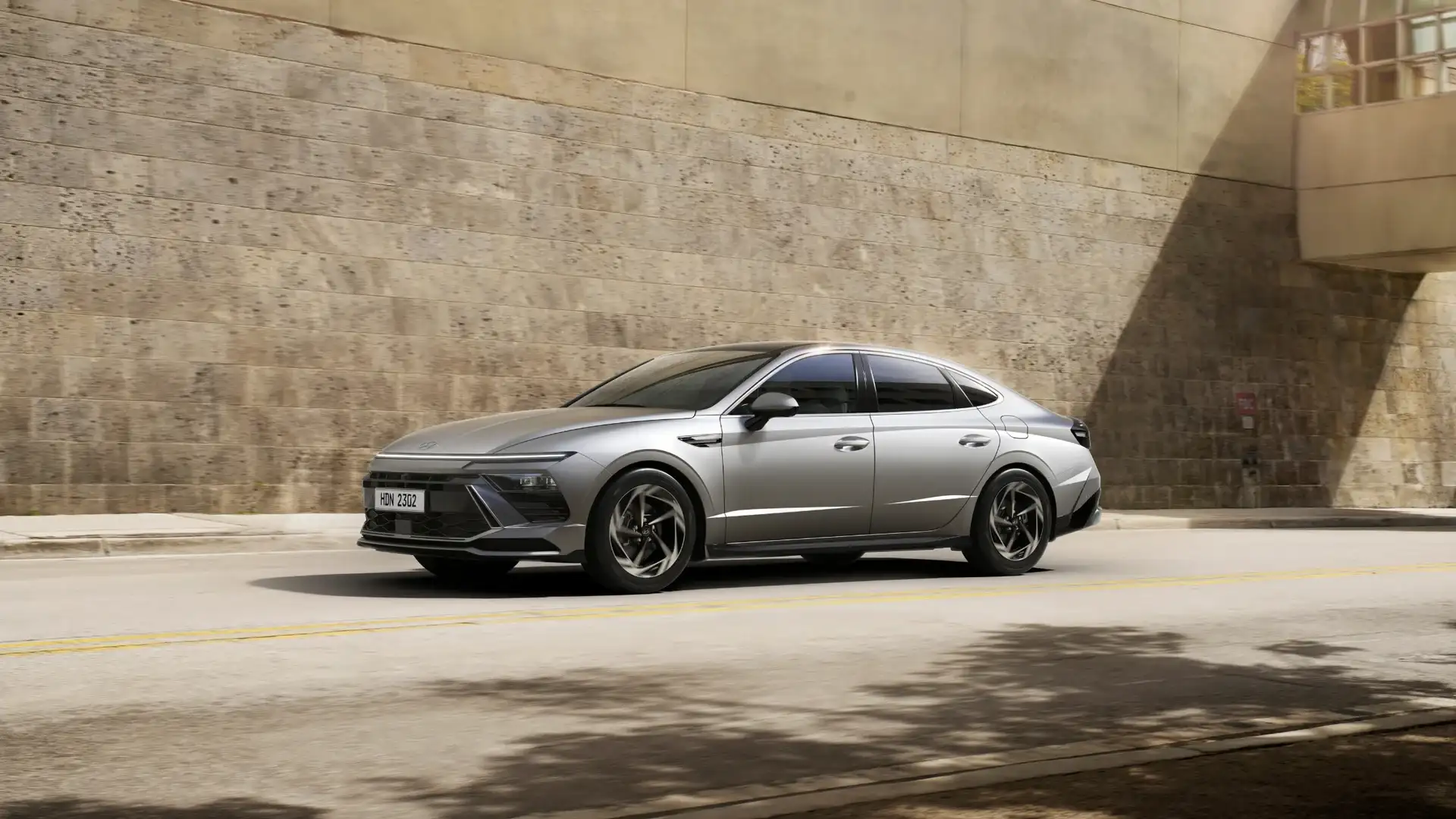
Precision-Focused Engineering Overview of the 2026 Hyundai Sonata
The 2026 Hyundai Sonata is engineered as a midsize sedan with multiple powertrain configurations, structured chassis construction, and integrated driver-assistance systems. The model lineup includes a 2.5-liter naturally aspirated engine, a 2.5-liter turbocharged engine for the N Line, and a 2.0-liter hybrid system. Each configuration uses a DOHC 16-valve inline 4-cylinder layout and operates with electronically controlled ignition systems. The vehicle is designed with a unibody structure composed primarily of high-tensile steel, supporting rigidity and consistent structural performance across all trims.
Engine Architecture and Output Specifications
The standard engine in the 2026 Hyundai Sonata is a Smartstream® 2.5-liter GDI and MPI DOHC 16-valve inline 4-cylinder unit with a displacement of 2,497 cc. It produces 191 horsepower at 6,100 rpm and 181 lb-ft of torque at 4,000 rpm. This engine features continuously variable valve timing and operates with a compression ratio of 13.0. Fuel delivery uses both gasoline direct injection and multi-port injection systems to support efficiency and combustion control.
The N Line configuration uses a Smartstream® 2.5-liter turbocharged GDI and MPI DOHC 16-valve inline 4-cylinder engine. This engine produces 290 horsepower at 5,800 rpm and 311 lb-ft of torque available from 1,650 to 4,000 rpm. The compression ratio is reduced to 10.5 to accommodate turbocharging. Both engines use hydraulic and conventional rubber motor mounts to control vibration and maintain stability under load.
The hybrid configuration uses a 2.0-liter GDI DOHC 16-valve inline 4-cylinder engine with a displacement of 1,999 cc. It produces 150 horsepower at 6,000 rpm and 139 lb-ft of torque at 5,000 rpm. The hybrid system includes dual continuously variable valve timing and a compression ratio of 14.0. This engine is paired with a permanent magnet synchronous electric motor producing 39 kW or 51 horsepower and 151 lb-ft of torque from zero to 1,800 rpm. Combined system output is rated at 192 horsepower.
Transmission Systems and Drive Configurations
The 2.5-liter engine is paired with an 8-speed electronic automatic transmission with overdrive lock-up torque converter. This transmission includes calibrated gear ratios ranging from 4.717 in first gear to 0.635 in eighth gear, with a reverse ratio of 3.239. The system supports smooth acceleration and controlled gear transitions.
The N Line model uses an 8-speed N Wet Dual Clutch transmission. This system features a wet-friction twin clutch design, allowing rapid gear changes and improved torque handling. Gear ratios differ from the standard transmission and are optimized for performance response. Steering wheel-mounted paddle shifters are included for manual gear selection.
The hybrid system uses a 6-speed electronic automatic transmission with SHIFTRONIC® manual shift mode. Paddle shifters in hybrid models control regenerative braking levels in most driving modes, while Sport mode enables manual gear selection. Final drive ratios are configured at 3.510 for the hybrid system.
Front-wheel drive is standard across the lineup, while the SEL Sport trim offers HTRAC all-wheel drive. The AWD system uses a final gear ratio of 3.510, compared to 3.195 for front-wheel-drive configurations. These configurations provide variation in traction distribution and drivetrain response.
Suspension Geometry and Steering Calibration
The 2026 Hyundai Sonata uses a MacPherson® strut front suspension combined with a multi-link rear suspension. Both front and rear assemblies include stabilizer bars and gas shock absorbers. This configuration supports consistent handling and load distribution.
The steering system uses a rack-and-pinion design with motor-driven power assist. The standard system is column-mounted, while the N Line uses a rack-mounted configuration. The overall steering ratio is 13.27 for the 2.5-liter and hybrid models and 12.35 for the N Line. Lock-to-lock steering turns measure 2.6 for standard models and 2.44 for the N Line. Turning diameter is measured at 35.9 feet across all trims.
Brake System Design and Control Systems
The braking system includes power-assisted disc brakes with pressure proportioning valves. The standard 2.5-liter and hybrid configurations use 12.0-inch ventilated front discs and 11.2-inch solid rear discs. The N Line increases front disc size to 13.6 inches and rear discs to 12.8 inches.
All configurations include Anti-lock Braking System with Electronic Brake-force Distribution, Brake Assist, Vehicle Stability Management, and Traction Control System. An electronic parking brake with automatic vehicle hold is standard across the lineup. These systems function together to regulate braking force, maintain stability during deceleration, and support traction control.
Exterior Systems and Functional Components
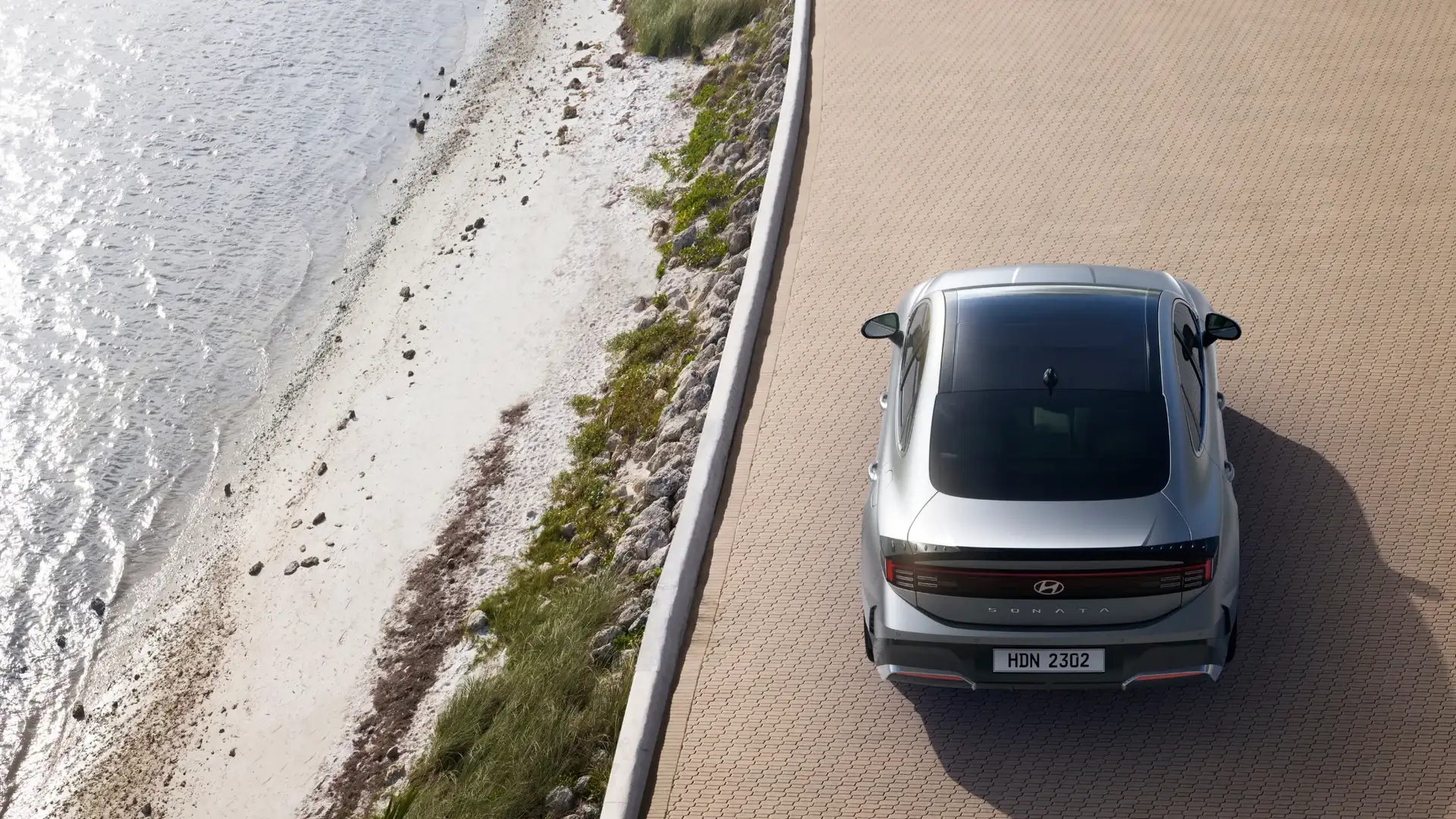
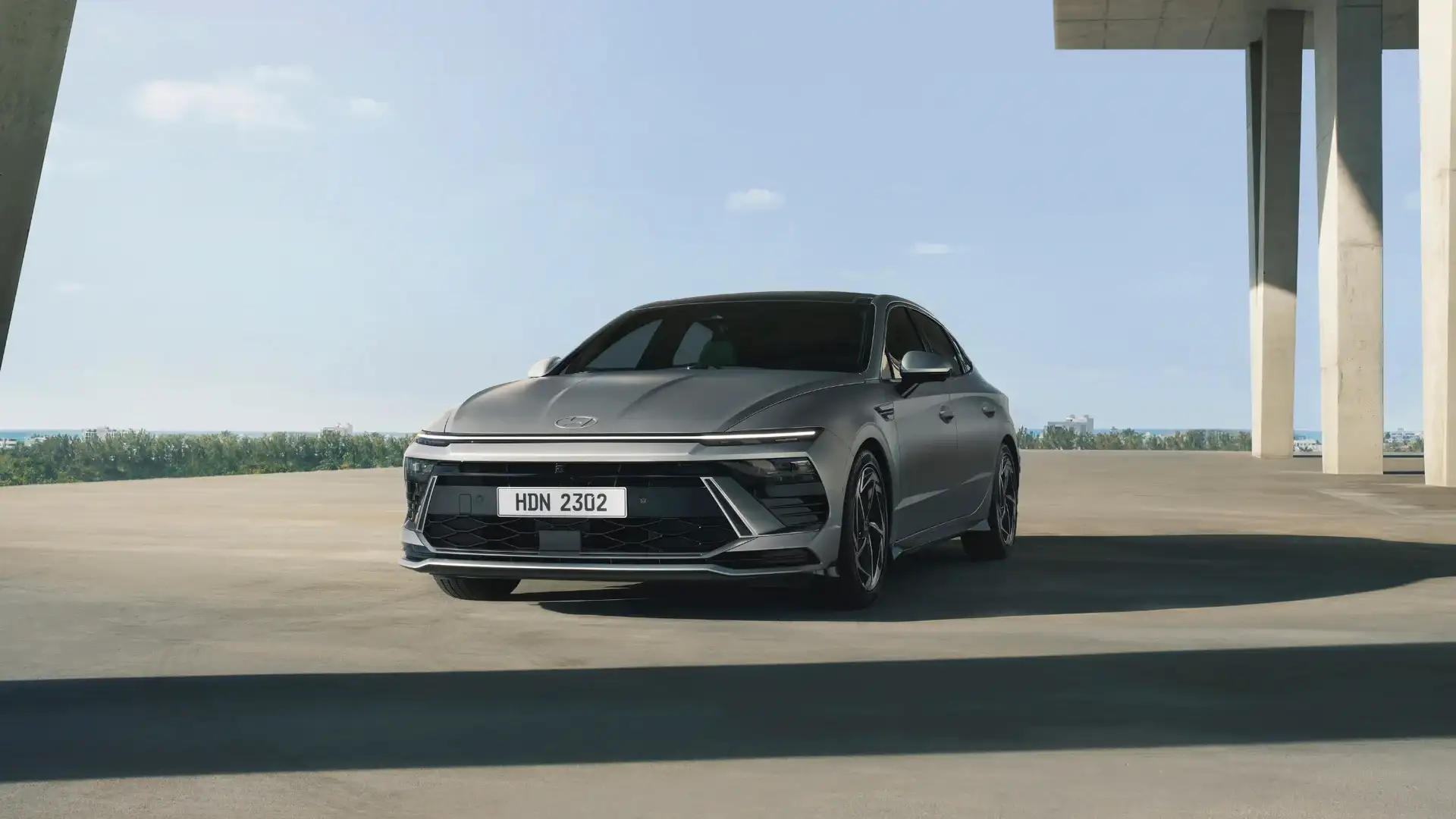
The exterior lighting system includes LED projector-type headlights, LED rear combination taillights, and a center high-mount stop lamp. Automatic light control and High Beam Assist are included. Select trims add fender-mounted LED turn signal indicators.
Side mirrors are power-adjustable and include manual folding capability. Heated mirrors are included on higher trims. Blind-Spot Collision Warning is integrated into the mirror system. Exterior glass includes solar-control glass and an acoustic-film windshield. Select trims add acoustic film to the front door glass.
Additional exterior features include a panoramic glass sunroof on selected trims, sport front bumper fascia, a sport rear diffuser, and a rear spoiler. Exhaust configurations vary by trim, including hidden exhaust outlets on standard models and twin-tip dual exhaust on the N Line.
Interior Configuration and Seating Systems
The 2026 Hyundai Sonata has a five-passenger seating configuration. Seat materials vary by trim and include premium cloth, H-Tex® with microfiber inserts, and leather-trimmed surfaces. The driver’s seat is available with 8-way power adjustment and lumbar support, while the front passenger seat can be configured with power adjustment.
Heated and ventilated front seats are available with three-level adjustments. The N Line includes sport-seat design with additional bolstering. Rear seating includes a 60/40 split fold-down configuration, adjustable headrests, and a center armrest with dual cup holders on select trims.
Interior dimensions include 46.1 inches of front legroom and 34.8 inches of rear legroom. Passenger volume measures 104.4 cubic feet, and trunk capacity measures 15.6 cubic feet. Interior layout includes a front center console storage box, door panel bottle holders, and integrated armrests.
Infotainment Systems and Digital Interfaces
The 2026 Hyundai Sonata integrates a 12.3-inch HD touchscreen display as the central interface. Standard audio configuration includes six speakers with HD Radio™ and SiriusXM® capabilities. The system supports smartphone integration through Apple CarPlay® and Android Auto™ with both wired and wireless connectivity.
Higher trims include a 12.3-inch navigation system paired with a Bose® premium audio system featuring 12 speakers, including a center channel and subwoofer. Additional features include Dynamic Voice Recognition, HERE HD Traffic, and Hyundai Pay functionality.
The system also includes Bluelink® connectivity, rear USB charging ports, a 12-volt outlet, and wireless device charging on select trims. A Wi-Fi hotspot is integrated into navigation-equipped configurations. Instrumentation includes digital displays for vehicle status, driver assistance systems, and operating conditions.
Climate Control and Driver Interface Systems
Climate control systems include manual air conditioning on base trims and dual automatic climate control with auto defog on higher trims. Rear seat air vents are integrated into the floor console on select configurations. All trims include a cabin air filter and rear window defroster with a timer.
The steering wheel includes integrated controls for audio, cruise control, and Bluetooth® connectivity. Tilt and telescopic adjustment is standard. Paddle shifters are included on select trims, with hybrid-specific functionality tied to regenerative braking control.
Instrumentation includes a speedometer, tachometer, coolant temperature gauge, fuel level gauge, odometer, and trip odometer. Indicator systems include alerts for driver assistance systems, braking systems, and vehicle status. A head-up display is available on higher trims.
Active Safety and Driver Assistance Systems
The 2026 Hyundai Sonata includes a comprehensive set of active safety systems. Forward Collision-Avoidance Assist detects pedestrians, cyclists, and junction turning scenarios. Blind-Spot Collision Warning includes Rear Cross-Traffic Collision-Avoidance Assist. Lane Keeping Assist and Lane Following Assist provide lane monitoring and corrective input.
Driver Attention Warning monitors driver behavior patterns. Safe Exit Warning alerts occupants to approaching vehicles when exiting. The Rear Occupant Alert monitors rear seat occupancy.
Higher trims include a Blind-Spot View Monitor, Surround View Monitor, and Park Distance Warning for forward, side, and reverse detection. Parking Collision-Avoidance Assist is included for rear detection. Highway Driving Assist supports lane centering and speed control under defined conditions. Remote Smart Parking Assist is available on select trims.
Structural Safety and Passive Protection Systems
Passive safety systems include advanced airbags for the driver, front passenger, driver’s knee, side-impact, and side-curtain coverage for both rows. The system includes an Occupant Classification System to regulate airbag deployment.
Seatbelt systems include 3-point restraints with pretensioners and force limiters. Rear seats include LATCH anchors and upper tether anchors. Structural features include front and rear crumple zones, body-side reinforcements, hood buckling creases, and energy-absorbing steering columns.
Additional safety systems include an anti-theft immobilizer, remote keyless entry with a panic function, a steering wheel lock, and an emergency trunk release. These systems provide layered occupant protection and vehicle security.
Dimensions, Capacities, and Efficiency Metrics
The 2026 Hyundai Sonata has a wheelbase of 111.8 inches, overall length of 193.3 inches, width of 73.2 inches, and height of 56.9 inches. Minimum ground clearance measures 5.3 inches. The aerodynamic coefficient of drag is 0.27 for standard models and 0.24 for hybrid models.
Fuel tank capacity is 15.9 gallons for gasoline models and 13.2 gallons for hybrid models. Engine oil capacity ranges from 5.5 to 6.7 quarts depending on configuration. Curb weight ranges from 3,232 pounds to 3,687 pounds depending on trim.
Fuel economy ratings vary by configuration. The standard 2.5-liter engine is rated at 28 mpg city, 38 mpg highway, and 32 mpg combined. The SEL Sport achieves 25 mpg city and 36 mpg highway in front-wheel-drive form and 24 mpg city and 33 mpg highway with all-wheel drive. The N Line is rated at 23 mpg city and 32 mpg highway. Hybrid models achieve up to 47 mpg city and 56 mpg highway.
Disclaimer: 2026 SONATA SE: 28 City/38 Hwy/32 Combined MPG. 2026 SONATA SEL SPORT: 25 City/36 Hwy/29 Combined MPG. 2026 SONATA SEL SPORT AWD: 24 City/33 Hwy/27 Combined MPG. 2026 SONATA N Line: 23 City/32 Hwy/27 Combined MPG. All figures are EPA estimates and for comparison purposes only. Actual mileage may vary with options, driving conditions, driving habits and vehicle’s condition.
Visit ALM Hyundai Lumberton to Schedule a Test Ride
We invite you to evaluate the 2026 Hyundai Sonata through a structured test drive at ALM Hyundai Lumberton near Raeford, NC. This process allows direct observation of engine response, transmission behavior, and steering calibration under controlled conditions. You can review the integration of the 12.3-inch display systems, driver-assistance features, and cabin control interfaces. A test drive also provides the opportunity to assess braking response, suspension tuning, and hybrid system transitions. Our team will assist in configuring the model that aligns with your technical requirements and preferred specifications.