

2026 Hyundai Sonata near Fayetteville, NC
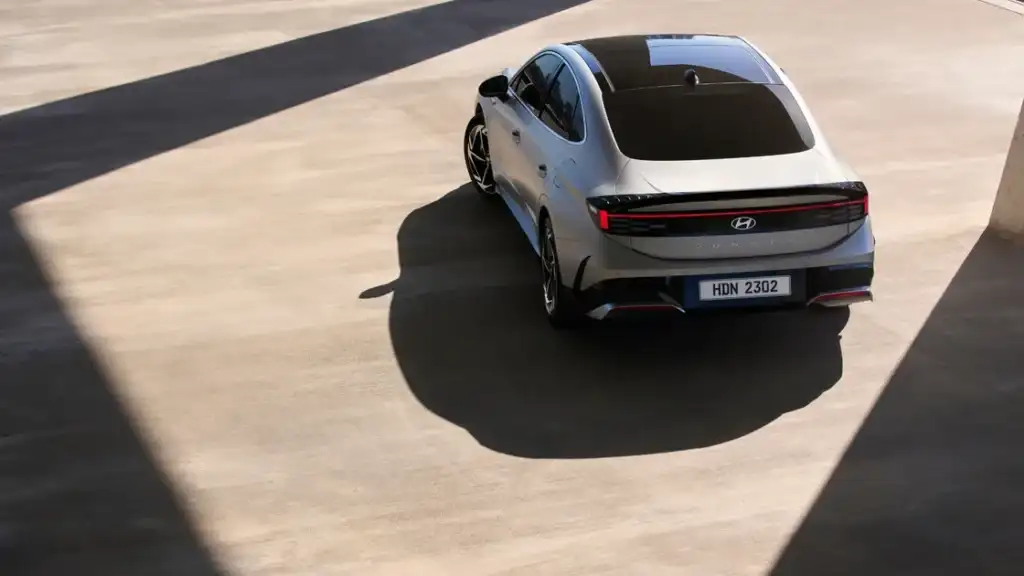
The 2026 Hyundai Sonata introduces a reengineered lineup focused on performance efficiency, advanced control systems, and integrated technology. Built with a high-tensile steel unibody structure, it offers enhanced rigidity, optimized weight balance, and refined driving stability. The 2026 Hyundai Sonata combines a modern design with functional aerodynamics and a complete range of advanced mechanical, electrical, and safety systems.
Engine Configurations and Mechanical Systems
The 2026 Hyundai Sonata is available with three main powertrain options designed to meet distinct performance standards. The first is the Smartstream® 2.5L GDI and MPI DOHC 16-valve inline four-cylinder engine with a displacement of 2,497 cc. It generates 191 horsepower at 6,100 rpm and 181 lb-ft of torque at 4,000 rpm. This configuration features Continuously Variable Valve Timing for precise valve control and a compression ratio of 13.0 to 1. The system uses unleaded fuel and includes WCC and UCC emissions controls, meeting SULEV30 standards.
For higher output performance, the N Line trim features a Smartstream® 2.5L Turbo GDI and MPI DOHC 16-valve inline four-cylinder engine with the same displacement. The turbocharged configuration produces 290 horsepower at 5,800 rpm and 311 lb-ft of torque between 1,650 and 4,000 rpm. It uses a 10.5 compression ratio and dual cooling channels for temperature stability. Both the standard and turbo variants use hydraulic and conventional rubber motor mounts for vibration isolation and structural damping.
The hybrid configuration uses the Nu Product Enhancement 2.0L GDI DOHC 16-valve inline four-cylinder engine. It generates 150 horsepower at 6,000 rpm and 139 lb-ft of torque at 5,000 rpm. Dual Continuously Variable Valve Timing controls airflow and combustion precision. The engine pairs with a permanent magnet synchronous motor producing 39 kW, or 51 horsepower, between 1,800 and 2,300 rpm, with 151 lb-ft of torque at low speed. The system uses a 1.62 kWh lithium-ion battery rated at 270 volts and a power output capacity of 56 kW. The combined hybrid output reaches 192 horsepower, and it uses a 14.0 compression ratio.
Transmission and Drivetrain Precision
The 2.5L engine variants use an eight-speed Smartstream® electronic automatic transmission with an overdrive lock-up torque converter. This unit provides smooth shift transitions with refined torque delivery across multiple gear ratios. Gear ratios range from 4.717 in first to 0.635 in eighth with a final drive ratio of 3.195 for FWD and 3.510 for AWD.
The 2.5T N Line engine integrates an 8-speed wet dual-clutch transmission. The wet-friction twin clutch system allows faster gear changes and better thermal durability during sustained acceleration. Its final gear ratio varies between 4.077 in lower gears and 2.944 in upper gears, maintaining optimal balance between torque output and cruising efficiency. Steering wheel paddle shifters are standard on the N Line and SEL Sport trims for manual gear control.
The hybrid powertrain employs a six-speed electronic automatic transmission with SHIFTRONIC® manual mode. It supports regenerative braking through paddle shift operation except when in sport mode. The gear ratios range from 4.639 in first to 0.772 in sixth with a final gear ratio of 3.510. Drive configuration across all hybrid trims is front-wheel drive.
Suspension and Steering Control
All trims of the 2026 Hyundai Sonata use MacPherson® strut front suspension and multi-link rear suspension systems. Each configuration is equipped with stabilizer bars and gas shock absorbers for consistent body stability and controlled rebound on variable surfaces.
The steering setup includes a motor-driven power steering system with rack-and-pinion design. In the 2.5L and hybrid variants, the system is column-mounted, while the N Line uses a rack-mounted configuration for quicker steering response. The steering ratio is 13.27 for the standard and hybrid models and 12.35 for the N Line. All trims offer a 2.6 or 2.44 turn lock-to-lock with a turning diameter of 35.9 feet.
Braking System and Vehicle Stability
Each model features a power-assisted braking system with pressure proportioning valves and four-wheel ventilated disc brakes. Front rotor sizes measure 12.0 inches on the 2.5L and hybrid trims and 13.6 inches on the N Line. Rear rotor diameters are 11.2 inches for the 2.5L and hybrid and 12.8 inches for the N Line.
Standard braking technologies include Anti-lock Braking System with Electronic Brake-force Distribution, Brake Assist, and an electronic parking brake with automatic vehicle hold. All versions use four-channel, four-sensor systems integrated with traction and stability control for even pressure modulation.
Exterior Construction and Lighting
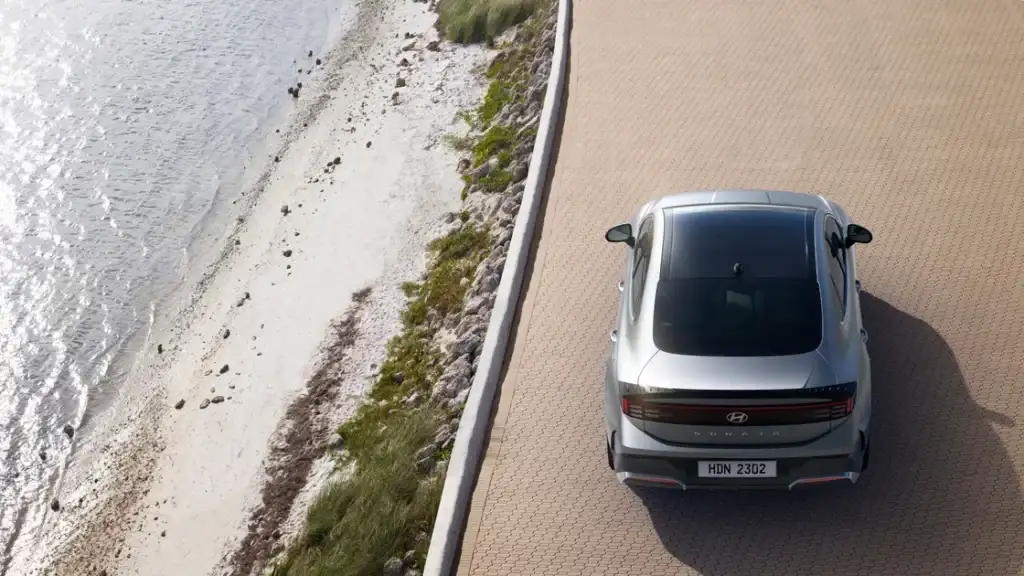
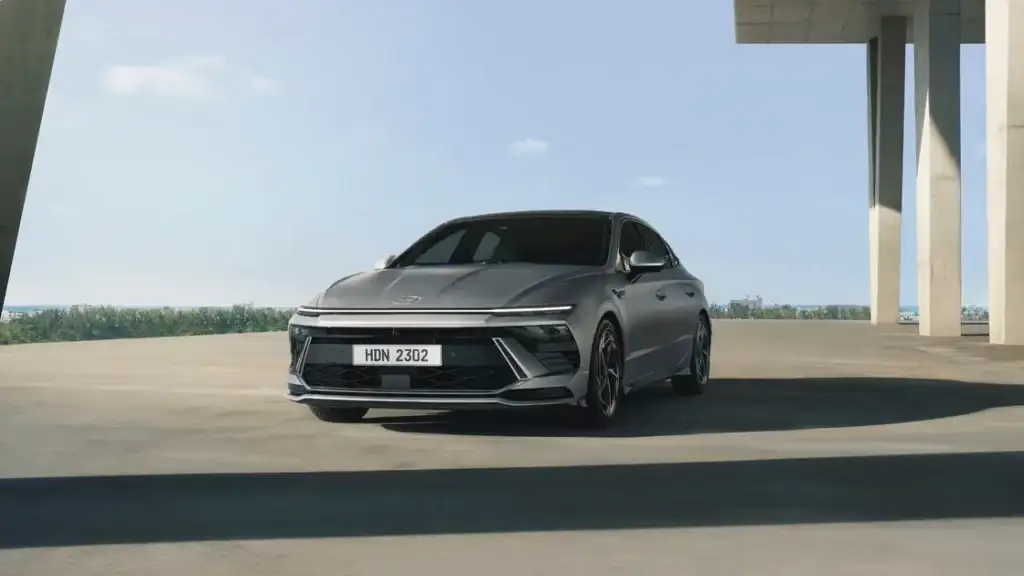
The body structure of the 2026 Hyundai Sonata is a unibody design made primarily of high-tensile steel. The aerodynamic profile achieves a coefficient of drag as low as 0.24 in hybrid models and 0.27 in standard configurations.
Exterior lighting includes LED projector-type headlights with automatic light control and high beam assist. LED rear combination lights and a center high-mount stop lamp are standard across trims. Fender-mounted LED turn signal indicators are available on upper trims. Power-adjustable, heated outside mirrors are equipped with integrated blind-spot warning indicators.
Available wheel sizes include 16-inch alloys on the SE, 18-inch on the SEL Sport, and 19-inch on the N Line. Tire dimensions range from 205/65R16 to 245/40R19. All configurations include a Tire Pressure Monitoring System with individual tire indicators. Solar control glass, an acoustic windshield, and available acoustic front door glass improve cabin insulation and visual clarity.
Interior Engineering and Technology Systems
The interior accommodates five passengers. Seat materials include premium cloth on base models, H-Tex® bolsters with microfiber inserts on N Line, and leather-trimmed seating on Limited trims. Power adjustments include an eight-way driver’s seat with lumbar support and an available six-way power front passenger seat. Heating and ventilation are offered in three-level systems for select trims.
The HVAC system includes a cabin air filter, electronic rear defroster, and dual automatic climate control on higher trims. Rear-seat air vents are available on all except the base model.
Instrumentation features digital meters for speed, engine temperature, fuel level, and trip monitoring. A color head-up display is available on the N Line. All trims include adjustable illumination and multiple indicator functions for safety systems, including LKA, FCA, DAW, and BSW.
Infotainment centers on a 12.3-inch high-definition touchscreen. The system supports AM/FM/MP3 playback, HD Radio™, SiriusXM® Satellite Radio, and Bluelink® connectivity. Standard integration includes wireless Apple CarPlay® and Android Auto™ capability. The Limited and N Line trims offer a Bose® premium audio system with twelve speakers, including a subwoofer and external amplifier. Navigation-equipped models include Wi-Fi hotspot functionality and Hyundai Pay for in-car transactions.
Convenience features include a proximity key with push-button start, Smart Cruise Control with stop-and-go, power windows with auto up and down functions, and power door locks. Highway Driving Assist and Smart Trunk operation are included on select trims. The steering wheel is tilt and telescopic with integrated audio and phone controls and an available heating function.
Safety Architecture and Driver Assistance
Every 2026 Hyundai Sonata is equipped with advanced restraint and active safety systems. The vehicle includes six airbags covering driver, passenger, side impact, and curtain areas, along with a driver’s knee airbag. Three-point seatbelts with pre-tensioners and adjustable front anchors are standard.
The active safety suite integrates Forward Collision-Avoidance Assist with pedestrian, cyclist, and junction-turning detection. Blind-Spot Collision Warning, Rear Cross-Traffic Collision-Avoidance Assist, and Lane Keeping and Following Assist operate through radar and camera systems. Additional features include Driver Attention Warning, High Beam Assist, Vehicle Stability Management, and Tire Pressure Monitoring with individual indicators.
Available systems on upper trims include Blind-Spot View Monitor, Surround View Monitor, and Parking Collision-Avoidance Assist Rear. Passive protections include crumple zones, energy-absorbing steering columns, hood buckling creases, and an anti-theft immobilizer integrated with the remote keyless entry system.
Dimensional Efficiency and Structural Design
The 2026 Hyundai Sonata measures 193.3 inches in overall length with a 111.8-inch wheelbase and 73.2-inch width. Overall height is 56.9 inches. Track widths vary with wheel size, ranging from 63.4 to 64.2 inches. Ground clearance measures 5.3 inches. Passenger volume totals 104.4 cubic feet with 15.6 cubic feet of trunk space, providing a total interior volume of 120 cubic feet.
Curb weight ranges from 3,232 pounds for the SE to 3,687 pounds for the hybrid Limited trim. Fuel tank capacities are 15.9 gallons for gasoline variants and 13.2 gallons for hybrid models. The standard fuel economy rating for the 2.5L engine configuration is 23 mpg city, 32 highway, and 27 combined, classified as a large car under EPA standards.
Schedule a Test Ride Today
The 2026 Hyundai Sonata demonstrates detailed engineering across every mechanical, electrical, and safety system. From the advanced Smartstream® and turbocharged engines to the efficient hybrid configuration, each model prioritizes structural strength, precise handling, and technology-driven control. The combination of aerodynamic design, extensive connectivity, and consistent performance defines the sedan’s technical refinement. Drivers seeking direct experience with its engine response, hybrid integration, and safety systems can schedule a test drive through ALM Hyundai Lumberton near Fayetteville, NC. Experiencing the balance of engineered precision and integrated technology of the 2026 Hyundai Sonata offers the clearest understanding of its mechanical capability. Booking a test drive allows an in-depth review of how these systems perform in practical driving environments and confirms the position of the 2026 Hyundai Sonata as a technologically advanced sedan for its class.