

2026 Hyundai Santa Fe Hybrid near Raeford, NC
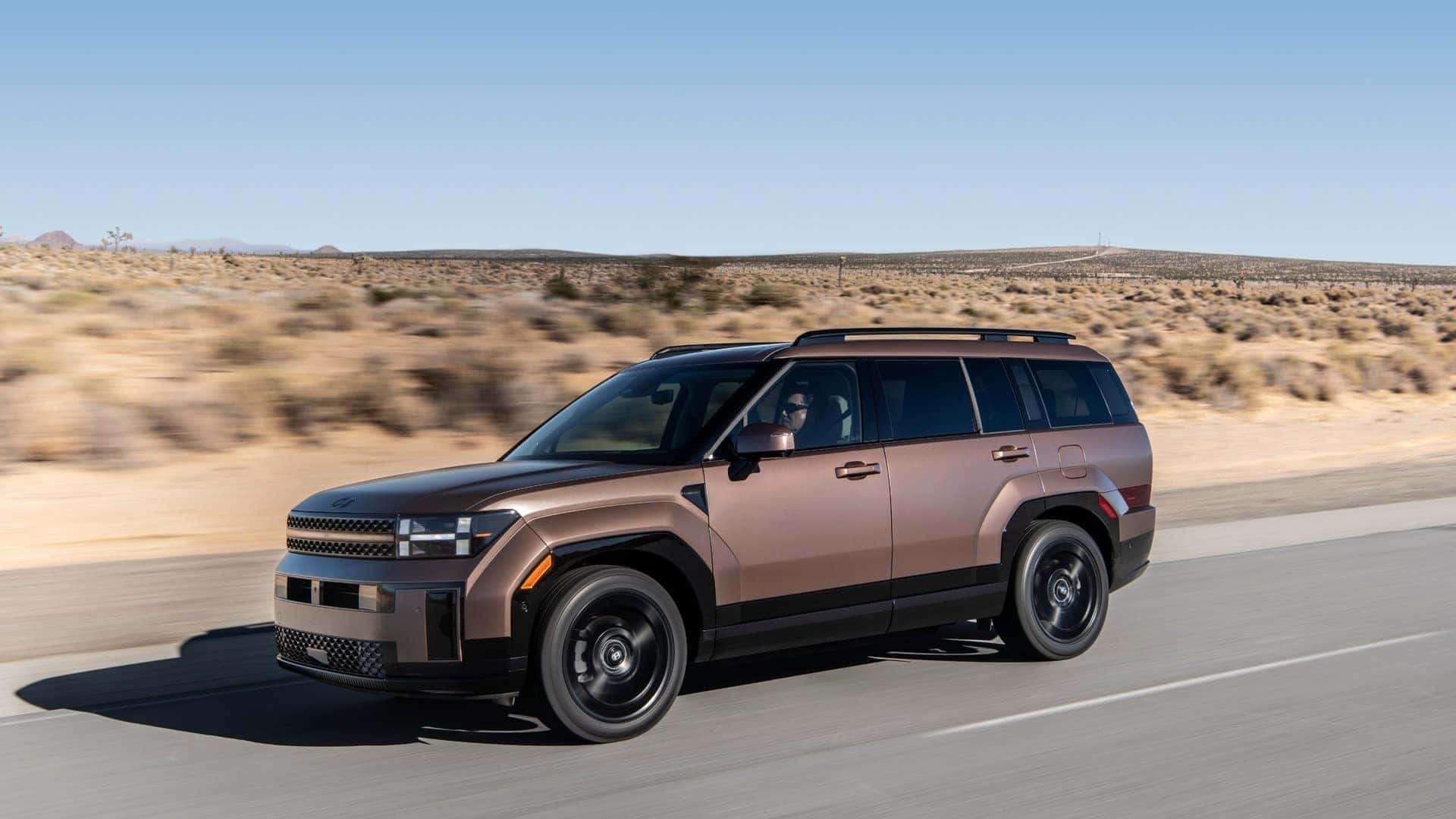
The 2026 Hyundai Santa Fe Hybrid is engineered as a midsize sport utility vehicle that prioritizes mechanical efficiency, structural integrity, and advanced system integration. This hybrid configuration combines internal combustion and electric propulsion within a unified drivetrain designed to support consistent performance, reduced fuel consumption, and stable drivability across varied operating conditions. The brand’s approach to the 2026 Hyundai Santa Fe Hybrid emphasizes functional design, controlled power delivery, and system reliability rather than cosmetic complexity. Each component is engineered to operate within precise tolerances, ensuring predictable behavior in daily driving, extended travel, and mixed road environments.
Hybrid Powertrain Architecture and Energy Management
The 2026 Hyundai Santa Fe Hybrid is powered by a Smartstream® 1.6-liter turbocharged gasoline direct injection inline four-cylinder engine paired with a permanent magnet synchronous electric motor. The gasoline engine produces 178 horsepower at 5,500 revolutions per minute and delivers 195 pound-feet of torque across a wide operating band from 1,500 to 4,500 revolutions per minute. This broad torque range supports steady acceleration and reduced gear hunting during variable driving conditions.
The electric motor contributes an estimated 60 horsepower and 195 pound-feet of torque, supplementing the combustion engine during low-speed operation and transitional load scenarios. Total combined system output reaches 231 horsepower, while combined system torque is rated at 271 pound-feet. The hybrid system prioritizes electric assistance during initial acceleration and low-load cruising, reducing engine strain and improving overall efficiency.
Electrical energy is stored in a lithium-ion battery with a total capacity of 1.49 kilowatt-hours and a maximum system voltage of 270 volts. The hybrid control unit continuously regulates energy flow between the battery, electric motor, and gasoline engine to maintain balanced performance and consistent response.
Transmission Design and Drivetrain Configuration
Power is delivered through a 6-speed automatic transmission specifically calibrated for hybrid operation. The transmission integrates Shift-By-Wire technology, replacing traditional mechanical linkages with electronic controls to improve response precision and reduce packaging complexity. Manual gear selection is available through SHIFTRONIC® paddle shifters, allowing drivers to manage gear engagement during descending grades or controlled driving situations.
The 2026 Hyundai Santa Fe Hybrid is available with front-wheel drive or the brand’s HTRAC all-wheel drive system. The all-wheel drive configuration employs active torque distribution that adjusts power delivery based on traction demands and selected drive modes. In standard operation, torque distribution can vary from a full front bias to a balanced front and rear split, supporting stability on low-traction surfaces.
Drive Mode Select functionality allows adjustment of throttle response, transmission shift logic, and torque distribution. Available modes include Comfort, Eco, Sport, and Smart, each calibrated to modify vehicle behavior according to driving conditions without altering mechanical limits.
Chassis Construction and Suspension Calibration
The vehicle is built on a unibody platform constructed primarily from high-strength steel. This structural approach improves torsional rigidity while supporting effective crash energy distribution. The front suspension uses a MacPherson® strut layout with coil springs and gas-pressurized shock absorbers featuring advanced internal valving. This configuration balances ride comfort with controlled body movement during cornering and braking.
The rear suspension consists of a multi-link independent design with separated springs and shock absorbers. This setup enhances wheel articulation and maintains consistent tire contact with the road surface, contributing to predictable handling behavior and improved passenger comfort over uneven pavement.
Steering is managed by a motor-driven power steering system mounted to the steering column. The steering system features a rack-and-pinion layout with an overall ratio of 13.7 and a lock-to-lock turning range of 2.6 turns. The turning diameter measures 37.9 feet curb to curb, supporting maneuverability in urban environments and confined spaces.
Braking Systems and Vehicle Control Technologies
The braking system incorporates four-wheel disc brakes with ventilated front rotors and solid rear rotors measuring 12.8 inches in diameter. An integrated electric brake booster is used on hybrid models to support regenerative braking while maintaining consistent pedal feel. Anti-lock braking with electronic brake-force distribution operates across all four wheels and is supported by traction control and electronic stability control.
Additional braking technologies include Hillstart Assist Control, Downhill Brake Control, and Trailer Sway Control. These systems operate in coordination with the powertrain and drivetrain control units to maintain vehicle stability during incline starts, descents, and light towing conditions.
Exterior Functional Design and Lighting Systems
Exterior design elements on the 2026 Hyundai Santa Fe Hybrid prioritize functionality and durability. LED projector headlights with LED accents are standard across all trims, along with LED daytime running lights and LED taillights. High Beam Assist automatically adjusts headlight output to reduce glare for oncoming traffic while maintaining forward visibility.
Acoustic laminated glass is used for the windshield and front side windows to reduce wind and road noise intrusion. Privacy glass is applied to rear and quarter windows, supporting interior thermal control and passenger comfort. Rain-sensing windshield wipers are available on select trims and automatically adjust wiping frequency based on detected moisture levels.
Wheel options for hybrid configurations include 18-inch and 20-inch alloy designs paired with all-season tires. Hybrid models utilize a tire mobility kit in place of a traditional spare tire, reducing vehicle weight and preserving cargo space.
Interior Configuration and Seating Engineering
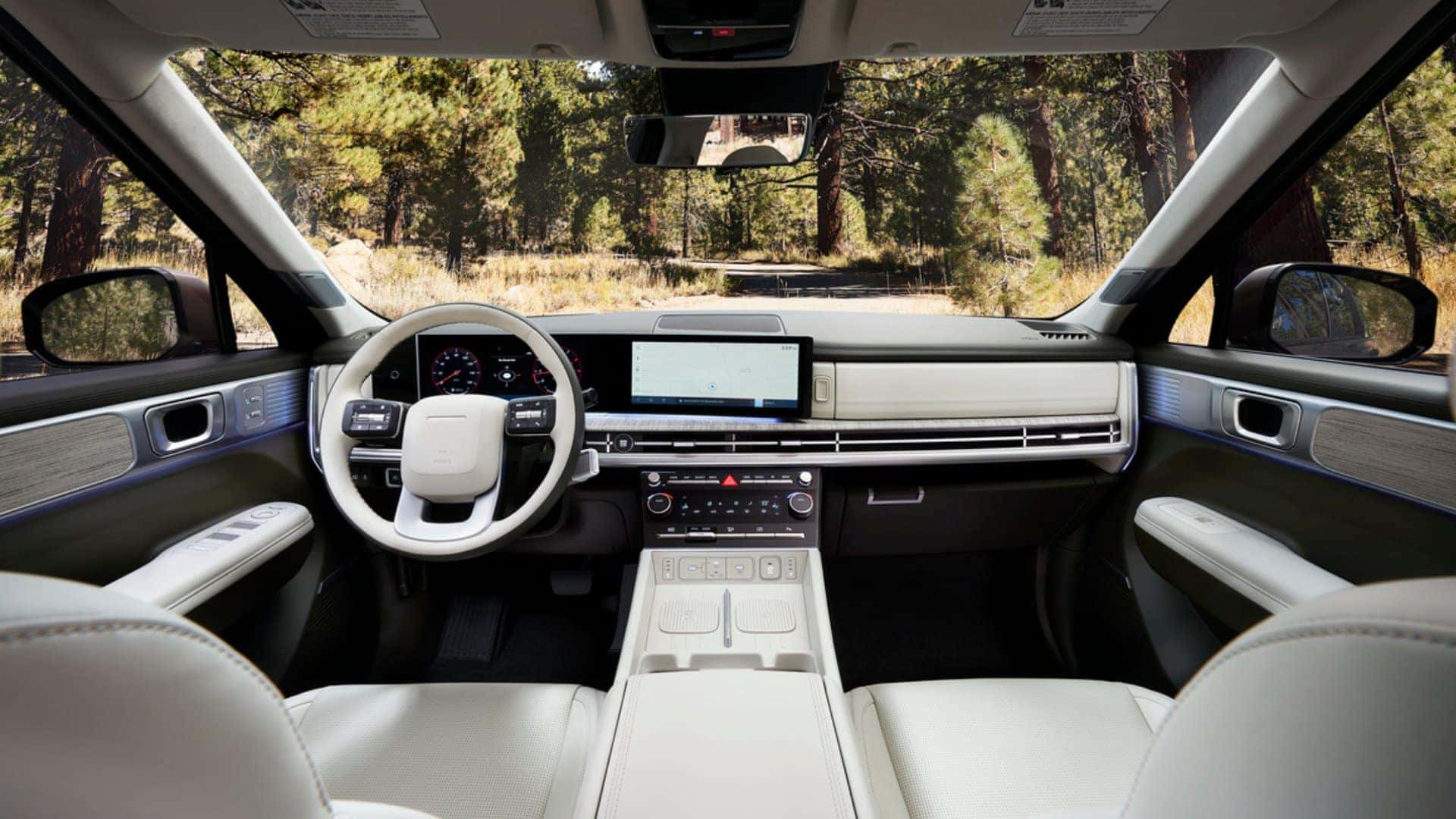
The interior layout of the 2026 Hyundai Santa Fe Hybrid emphasizes seating flexibility, material durability, and occupant support. Seating capacity ranges from six to seven passengers depending on trim level and second-row configuration. Available upholstery materials include YES Essentials stain-resistant cloth, H-Tex® leatherette, leather-trimmed seating, and Nappa leather on higher trims.
Front seating configurations include power adjustment, lumbar support, heating, ventilation, and integrated driver memory functions. The second row features a 60/40 split fold-flat design with recline capability and adjustable head restraints. Captain’s chairs are available on select trims, reducing seating capacity while increasing individual passenger comfort.
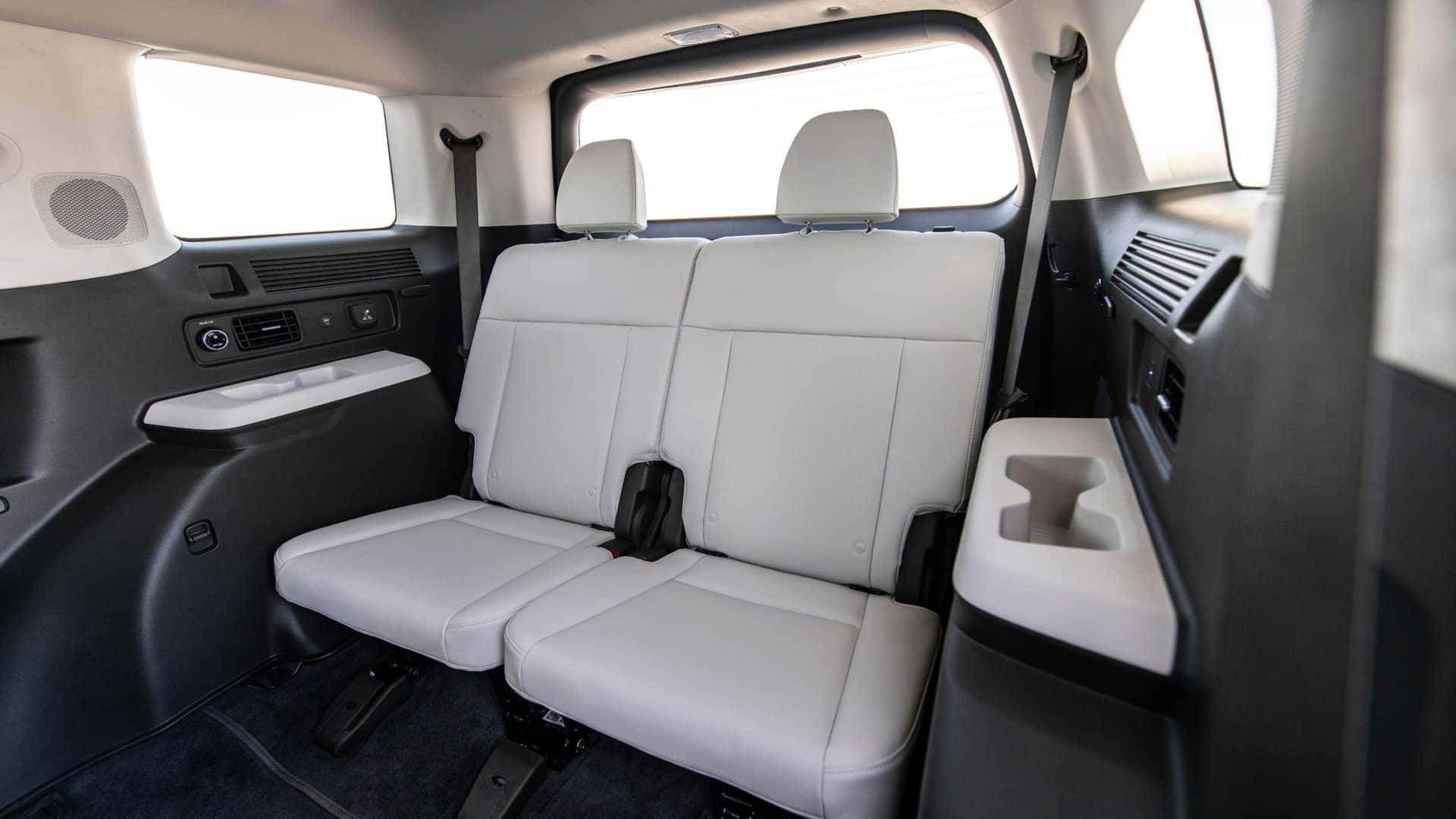
The third row incorporates a 50/50 folding design with integrated room lighting. Cargo space measures 79.6 cubic feet behind the front seats, 40.5 cubic feet behind the second row, and 14.6 cubic feet behind the third row. Underfloor storage compartments support organized cargo management without interfering with passenger seating.
Infotainment Systems and Digital Interfaces
The 2026 Hyundai Santa Fe Hybrid is equipped with Hyundai’s ccNC infotainment architecture. A 12.3-inch touchscreen display with onboard navigation is available and includes traffic flow data, incident reporting, and integrated Wi-Fi hotspot capability. Wireless Apple CarPlay® and Android Auto™ are standard across all trims, allowing device connectivity without physical cables.
Audio systems range from a standard display audio configuration to a Bose® premium system with 12 speakers. Multiple USB charging ports are distributed across all three seating rows, and wireless device charging is available with dual charging pads on select trims. A windshield-projected head-up display provides driving data within the driver’s line of sight on higher trims.
Climate Control and Cabin Systems
Automatic dual-zone climate control with auto-defog functionality regulates interior temperature and humidity levels. Rear passengers benefit from dedicated second-row and third-row air vents to maintain consistent airflow distribution. Cabin air filtration improves air quality by reducing particulate intrusion.
Additional comfort features include ambient interior lighting on select trims, heated steering wheel functionality, and leather-wrapped steering controls. All systems are electronically managed to maintain stable cabin conditions without excessive energy draw from the hybrid system.
Safety Architecture and Driver Assistance Systems
The 2026 Hyundai Santa Fe Hybrid incorporates a comprehensive safety structure supported by advanced driver assistance technologies. Standard airbag coverage includes advanced front airbags, a driver knee airbag, seat-mounted side airbags for the first and second rows, and full-length side curtain airbags.
Active safety systems include Forward Collision-Avoidance Assist with pedestrian, cyclist, and junction turning detection; Lane Keeping Assist; Lane Following Assist 2; Driver Attention Warning; and Safe Exit Assist. Blind-Spot Collision-Avoidance Warning and Rear Cross-Traffic Collision-Avoidance Assist support situational awareness during lane changes and reversing maneuvers.
Available systems include Highway Driving Assist 2, Blind-Spot View Monitor, Surround View Monitor, and Remote Smart Parking Assist. These technologies function within defined operational parameters to support driver input without overriding manual control.
Vehicle Dimensions, Capacities, and Efficiency Metrics
The 2026 Hyundai Santa Fe Hybrid measures 190.2 inches in overall length with a wheelbase of 110.8 inches. Overall width measures 74.8 inches, and overall height with roof rails is 67.7 inches. Minimum ground clearance is rated at 7.0 inches. The aerodynamic drag coefficient is measured at 0.294, contributing to reduced wind resistance.
Fuel economy ratings for the hybrid configuration reach an estimated 36 miles per gallon combined in front-wheel drive form and 34 miles per gallon combined with all-wheel drive. Fuel tank capacity is 17.7 gallons, supporting extended driving range. Total interior volume measures 165.6 cubic feet, with passenger volume measuring 151.0 cubic feet.
Disclaimer: 2026 SANTA FE Hybrid SE, SEL, Limited and Calligraphy FWD: 37 City/36 Highway/36 Combined MPG. 2026 SANTA FE Hybrid SE, SEL, Limited and Calligraphy AWD: 35 City/34Highway/34 Combined MPG. All figures are EPA estimates and for comparison purposes only. Actual mileage may vary with options, driving conditions, driving habits and vehicle’s condition.
Schedule a Test Ride near Raeford, NC
Drivers interested in evaluating the balance of hybrid efficiency, mechanical stability, and integrated technology offered by the 2026 Hyundai Santa Fe Hybrid can benefit from direct vehicle interaction. Experiencing the smooth transition between electric and gasoline power provides clarity on system responsiveness and drivability. Hands-on evaluation of the suspension, steering calibration, and driver assistance technologies further illustrates how the vehicle performs under typical driving conditions. Scheduling a test drive allows prospective owners to assess seating comfort, visibility, and digital interface operation firsthand. Availability for test drives can be arranged through ALM Hyundai Lumberton near Raeford, NC, offering an opportunity to explore how this hybrid SUV aligns with practical driving requirements.