

2026 Hyundai Santa Cruz near Raeford, NC
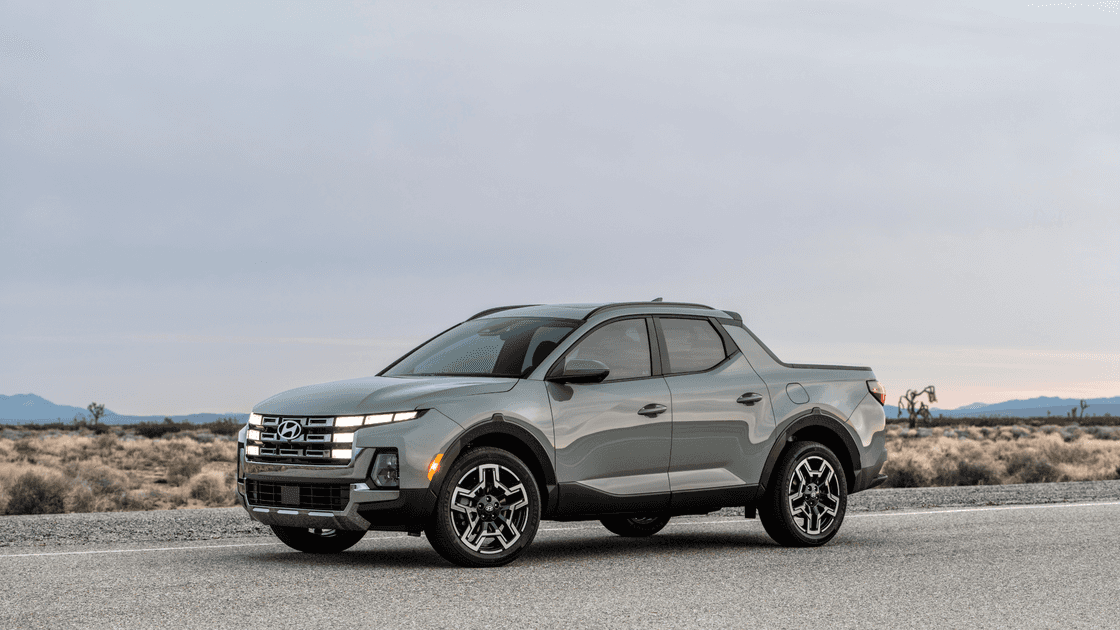
The 2026 Hyundai Santa Cruz is engineered as a compact pickup designed to integrate passenger vehicle dynamics with functional cargo capability. Built on a unibody platform and constructed using advanced high-strength steel, the model focuses on structural rigidity, balanced weight distribution, and controlled handling characteristics. Its engineering approach prioritizes mechanical efficiency, integrated technology systems, and adaptable utility rather than stylistic excess. Every major system, from the powertrain to the driver assistance suite, is designed to function cohesively within defined performance parameters.
Smartstream® Powertrain Architecture and Output Characteristics
The 2026 Hyundai Santa Cruz is offered with two Smartstream® inline four-cylinder gasoline engines, each engineered to support different performance requirements while maintaining compatibility with regular unleaded fuel. The standard 2.5-liter GDI plus MPI engine displaces 2,497 cubic centimeters and features dual overhead camshafts with 16 valves. Continuously Variable Valve Timing is integrated to regulate intake and exhaust valve operation across varying engine speeds. This engine produces 191 horsepower at 6,100 revolutions per minute and 181 pound-feet of torque at 4,000 revolutions per minute. A variable intake system supports airflow efficiency across the operating range, while an aluminum block and cylinder head contribute to weight reduction and thermal management.
The available 2.5-liter turbocharged engine retains the same displacement and basic architecture but incorporates forced induction through a turbocharged intake system. Compression is reduced to support boosted operation, resulting in a compression ratio of 10.5. Output increases to 281 horsepower at 5,800 revolutions per minute, while torque rises to 311 pound-feet available between 1,700 and 4,000 revolutions per minute. This torque plateau supports consistent acceleration under load and improved responsiveness during highway merging and towing scenarios.
Both engines are paired with an 8-speed automatic transmission using a torque converter. Gear ratios are calibrated differently depending on engine and drivetrain configuration to optimize torque delivery and cruising efficiency. Front-wheel drive is standard on select configurations, while the HTRAC all-wheel-drive system is available to provide active torque distribution based on traction conditions. Drive Mode Select is integrated through a center-console-mounted control, allowing adjustments to throttle response and drivetrain behavior.
Chassis Construction and Structural Engineering
The 2026 Hyundai Santa Cruz utilizes a unibody chassis with a monocoque body structure, constructed primarily from advanced high-strength steel and high-tensile steel. This material selection supports torsional rigidity while managing overall curb weight. The design supports predictable handling characteristics and structural durability during load-bearing operation.
Front suspension is configured with a MacPherson® strut system using coil springs and gas-pressurized shock absorbers. The rear suspension employs a multi-link layout with self-leveling gas-pressurized shock absorbers. This rear configuration assists in maintaining consistent ride height when carrying cargo or towing. The suspension geometry is tuned to balance ride comfort with lateral stability.
Steering is managed through a motor-driven power steering system using a rack-and-pinion layout mounted to the steering column. The overall steering ratio is 14.2, and the system provides 2.62 turns lock to lock. The turning diameter measures 39.6 feet curb to curb, supporting maneuverability in constrained environments.
Braking Systems and Vehicle Control Technologies
All configurations of the 2026 Hyundai Santa Cruz are equipped with four-wheel disc brakes. The front brakes utilize ventilated discs measuring 12.8 inches in diameter and 1.2 inches in thickness, while the rear brakes use solid discs measuring 12.8 inches by 0.5 inches. The braking system incorporates Anti-lock Braking System functionality with Electronic Brake-force Distribution.
Additional brake-related control systems include Brake Assist, Downhill Brake Control, Hillstart Assist Control, and an electronic parking brake with automatic vehicle hold functionality. These systems are designed to operate in coordination with the Electronic Stability Control and Traction Control systems to manage wheel slip, braking force, and vehicle stability under variable driving conditions.
Exterior Dimensions and Functional Design Parameters
The exterior dimensions of the 2026 Hyundai Santa Cruz reflect its compact pickup classification. The wheelbase measures 118.3 inches, while overall length reaches 195.7 inches, extending slightly on off-road-oriented configurations. Overall width measures 75.0 inches, and overall height with roof rails measures 66.7 inches. Ground clearance is rated at 8.6 inches for both two-wheel-drive and all-wheel-drive configurations.
Approach, departure, and breakover angles are engineered to support light off-road operation. The coefficient of drag is measured at 0.36, contributing to aerodynamic efficiency. Wheel options include 18-inch and 20-inch alloy wheels, paired with corresponding tire sizes optimized for ride comfort and load support.
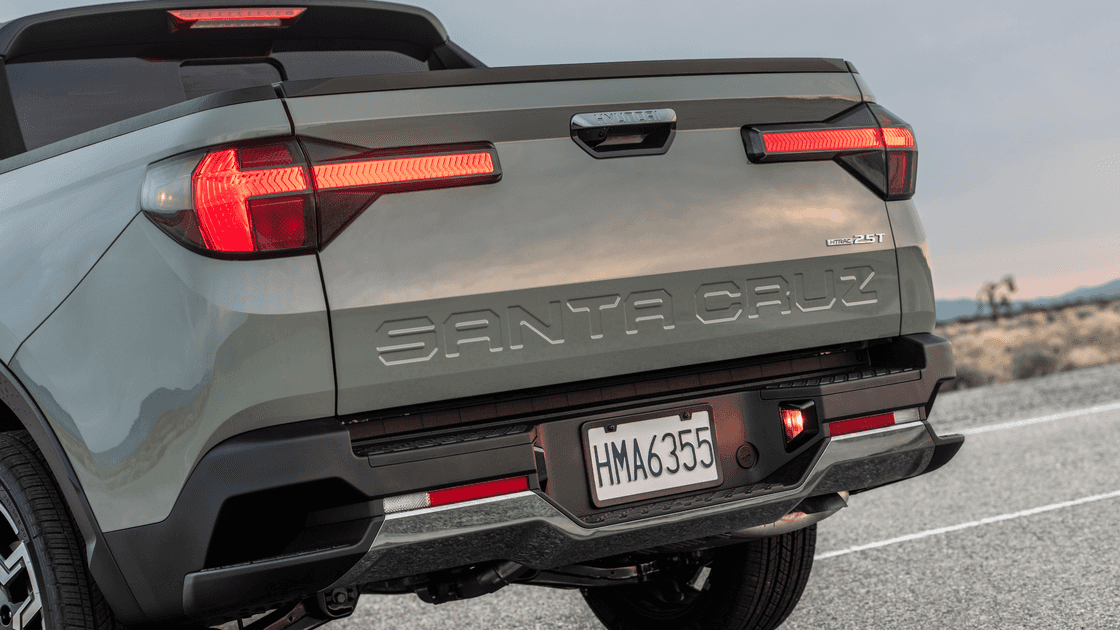
Lighting systems include bi-LED projector headlights, LED daytime running lights, LED taillights, and automatic headlight control with High Beam Assist. Acoustic laminated windshield glass and solar-control glass on the windshield and front doors support cabin noise reduction and thermal regulation.
Integrated Open Bed Engineering and Load Management
The 2026 Hyundai Santa Cruz open bed is constructed using sheet-molded composite material designed to resist corrosion and impact deformation. Bed length ranges from 48.4 inches to 74.8 inches depending on tailgate position. Bed width measures up to 53.9 inches at maximum and 42.7 inches between wheelhouses. Bed depth measures 19.2 inches, while bed height above ground measures 31.9 inches.
Standard and available features include lockable under-bed storage, sidewall storage compartments, heavy-duty cargo D-rings, and an integrated rear bumper with side steps. Select configurations include a factory-installed integrated tonneau cover with dual T-slot accessory tracks rated to support up to 440 pounds when load distribution requirements are met. A 115-volt power outlet is integrated into the sidewall storage area on applicable trims.
Interior Layout, Seating Systems, and Cabin Dimensions
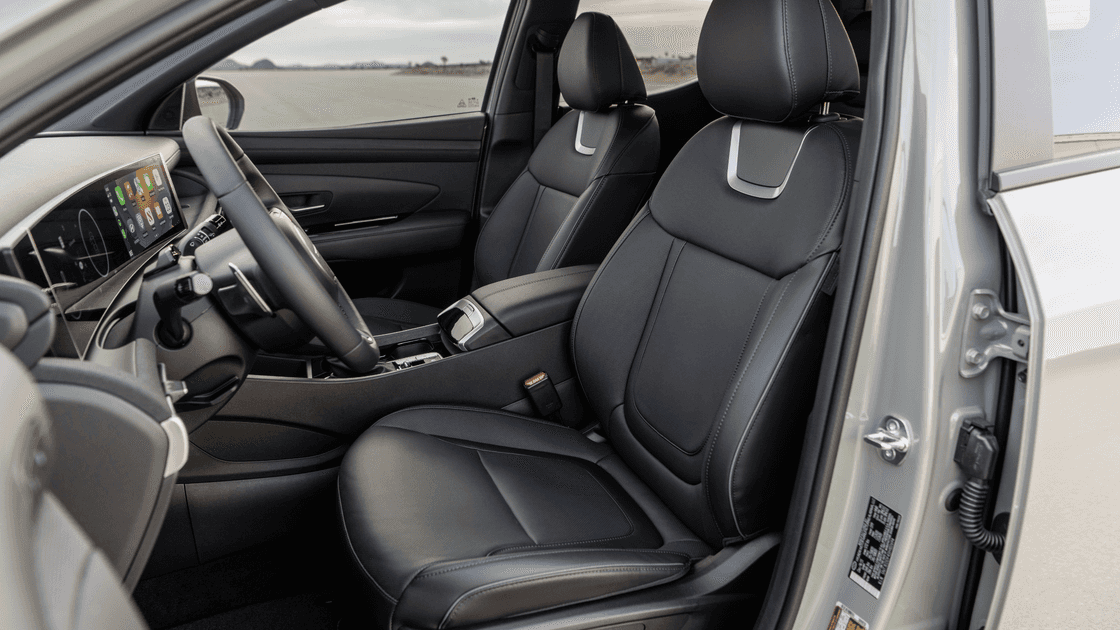
The interior of the 2026 Hyundai Santa Cruz is configured to accommodate five occupants. Seating materials vary by trim and include stain-resistant cloth, H-Tex® leatherette, and leather-trimmed seating surfaces. Front seating configurations include 6-way manual or 8-way power driver adjustment, power lumbar support, and available heated and ventilated front seats.
Rear seating incorporates a 60/40 split tip-up cushion design to expand interior cargo functionality. Interior headroom measures 40.2 inches in front and 39.6 inches in the rear without a sunroof. Legroom measures 41.4 inches in the front and 36.5 inches in the rear. Total interior volume is rated at 101.8 cubic feet.
Infotainment Systems and Digital Interfaces
Technology integration in the 2026 Hyundai Santa Cruz centers on touchscreen-based interfaces and digital instrumentation. Standard configurations include a 12.3-inch touchscreen display supporting wireless Apple CarPlay® and Android Auto™. Higher trims incorporate a 12.3-inch audio-video-navigation system with onboard navigation functionality.
Digital instrumentation includes a 4.2-inch multi-information display on lower trims and a 12.3-inch fully digital instrument cluster on higher trims. Over-the-air update capability is supported for multimedia systems and electronic control units. Multiple USB Type-C ports are available for front and rear passengers.
Active and Passive Safety System Integration
Safety systems in the 2026 Hyundai Santa Cruz include a comprehensive airbag configuration with advanced front airbags, side-impact airbags, side-curtain airbags with rollover sensors, and rear side airbags. Seatbelt pretensioners, load limiters, and LATCH anchor systems are standard across all seating positions.
Active safety technologies include Forward Collision-Avoidance Assist with pedestrian, cyclist, and junction turning detection on select trims; Blind-Spot Collision Warning; Rear Cross-Traffic Collision-Avoidance Assist; Lane Keeping Assist; Lane Following Assist; Driver Attention Warning; Safe Exit Warning; and Rear Occupant Alert. Higher trims add Highway Driving Assist, navigation-based smart cruise control with curve control, Surround View Monitor, and Blind-Spot View Monitor.
Towing Capacity, Weights, and Operational Limits
Curb weight varies by configuration, ranging from approximately 3,779 pounds to over 4,191 pounds depending on drivetrain and trim. Gross Vehicle Weight Rating ranges up to 5,798 pounds on applicable configurations. Maximum trailer weight is rated at 3,500 pounds when equipped with trailer brakes, with a reduced capacity when brakes are not present.
Fuel tank capacity is 17.7 gallons. Engine oil capacity measures 5.8 liters with filter replacement. Roof side rails support a static and dynamic load rating of 220 pounds.
Schedule a Test Ride near Raeford, NC
A detailed evaluation of the 2026 Hyundai Santa Cruz allows prospective drivers to examine its powertrain calibration, chassis behavior, and integrated technology systems in a controlled environment. A test drive provides direct insight into engine response, transmission operation, and advanced safety feature performance. Our team at ALM Hyundai Lumberton near Raeford, NC can coordinate a comprehensive vehicle walkaround that highlights drivetrain options, bed functionality, and driver assistance technologies. Experiencing the 2026 Hyundai Santa Cruz firsthand offers a clear understanding of its engineering priorities and operational characteristics. Scheduling a test drive supports informed decision-making based on measurable performance and functional design rather than assumptions.