

2026 Hyundai Santa Cruz near Fayetteville, NC
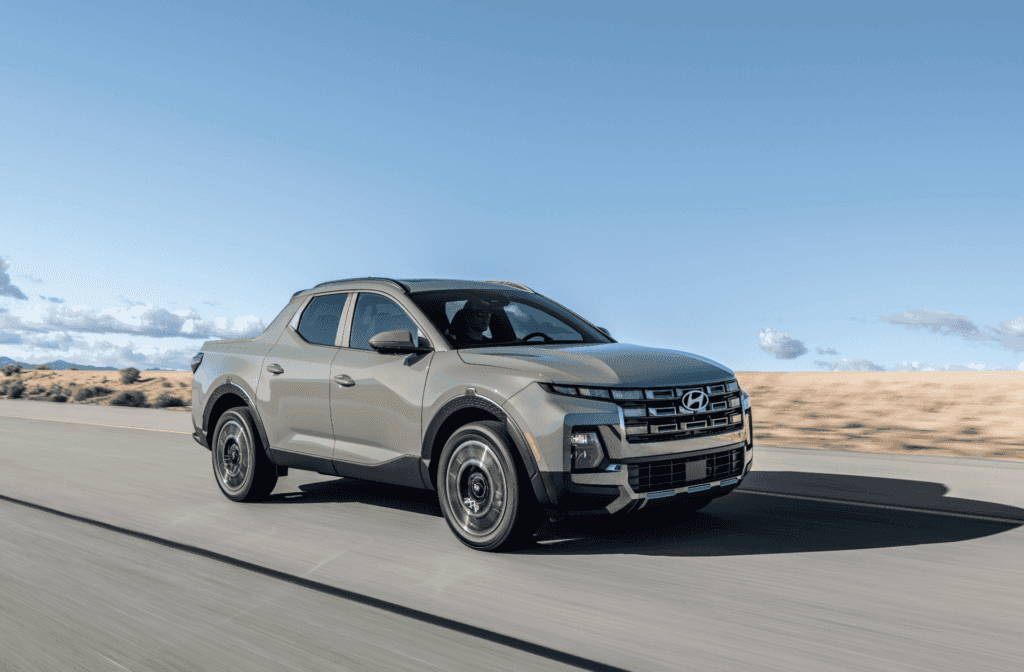
The 2026 Hyundai Santa Cruz presents a well-structured blend of mechanical durability and design efficiency. It is configured to serve utility and performance functions within a unibody construction that utilizes advanced high-strength steel. The Hyundai approach to integrating technical detail with practical application is evident in every feature of this compact sport adventure vehicle. The 2026 Hyundai Santa Cruz is available with two powertrains, front-wheel drive or all-wheel drive, multiple trim levels, and a wide array of embedded systems that support its capability across varied driving conditions.
Engine Architecture and Mechanical Design
The 2026 Hyundai Santa Cruz is built on the Hyundai Smartstream® engine family. The base powertrain features a 2.5-liter Gasoline Direct Injection (GDI) and Multi-Point Injection (MPI) dual-injection inline 4-cylinder engine with a displacement of 2,497 cc. It incorporates a Double Overhead Camshaft (DOHC) configuration with 16 valves, and a compression ratio of 13.0:1. The intake system uses a variable design, and the exhaust terminates in a single-tip layout. This engine produces 191 horsepower at 6,100 revolutions per minute and 181 pound-feet of torque at 4,000 rpm. It operates on regular unleaded fuel and is rated as an Ultra Low Emissions Vehicle (ULEV).
For enhanced performance, the turbocharged 2.5-liter engine includes a Gasoline Direct Injection and Multi-Point Injection combination. It retains the 2,497 cc displacement, aluminum block and head, and DOHC 16-valve layout. The turbocharged intake system supports a compression ratio of 10.5:1, producing 281 horsepower at 5,800 rpm and 311 pound-feet of torque from 1,700 to 4,000 rpm. Both engine types include a hood insulator and a full engine cover.
Transmission Configuration and Drivetrain Options
Every 2026 Hyundai Santa Cruz is equipped with an 8-speed automatic transmission using a torque converter. The drive system is either standard front-wheel drive or optional HTRAC all-wheel drive, depending on the trim level. The HTRAC system operates on an active on-demand model that adjusts torque distribution based on traction needs. Drive mode selection is available through a center console-mounted control.
Gear ratios vary between the two engines. The 2.5L front-wheel drive and all-wheel drive models feature a first gear ratio of 4.487 and an eighth gear ratio of 0.635, with a final drive ratio of 4.081. The turbocharged 2.5L all-wheel drive model uses a first gear ratio of 4.808 and an eighth gear ratio of 0.648, with a final drive ratio of 3.51. The transmission also includes a reverse gear ratio of 3.081 for the naturally aspirated model and 3.425 for the turbocharged variant.
Suspension, Steering, and Braking Components
The suspension system is engineered for multi-surface adaptability. The front suspension consists of MacPherson® struts paired with gas-pressurized shock absorbers and coil springs. The rear uses a multi-link design also featuring gas-pressurized shocks with a self-leveling function. The steering is managed through a column-mounted Motor Driven Power Steering (MDPS) system with a rack-and-pinion layout. It maintains an overall ratio of 14.2 with 2.62 turns lock-to-lock and a turning circle of 39.6 feet curb to curb.
Braking components include ventilated front discs measuring 12.8 inches by 1.2 inches and solid rear discs at 12.8 inches by 0.5 inches. Standard electronic safety enhancements include Anti-lock Braking System (ABS), Electronic Brake-force Distribution (EBD), Brake Assist, Downhill Brake Control (DBC), Hillstart Assist Control (HAC), and an electronic parking brake with auto hold functionality. All models feature a 4-channel, 4-sensor brake system.
Exterior Structure and Open Bed Capabilities
The 2026 Hyundai Santa Cruz uses a unibody design constructed with high-tensile steel and advanced high-strength steel materials. All models feature LED lighting systems, including Bi-LED projector headlamps, LED daytime running lights, LED taillights, and LED bed lighting on select trims. Roof-mounted stop lamps and automatic headlights are standard. Select models include a power sunroof, roof side rails, and matte black exterior trim for added styling and function.
Open bed features include a lockable under-bed storage compartment, sheet-molded composite bed, sidewall storage, heavy-duty cargo D-rings, and a multi-functional tailgate with assisted open and close. Higher trims are fitted with an integrated tonneau cover featuring dual T-slot accessory tracks, a 115V outlet in the sidewall, and an adjustable cleat track system. Integrated rear bumper side steps and bed floor access points improve physical utility.
Interior Layout and Technology Integration
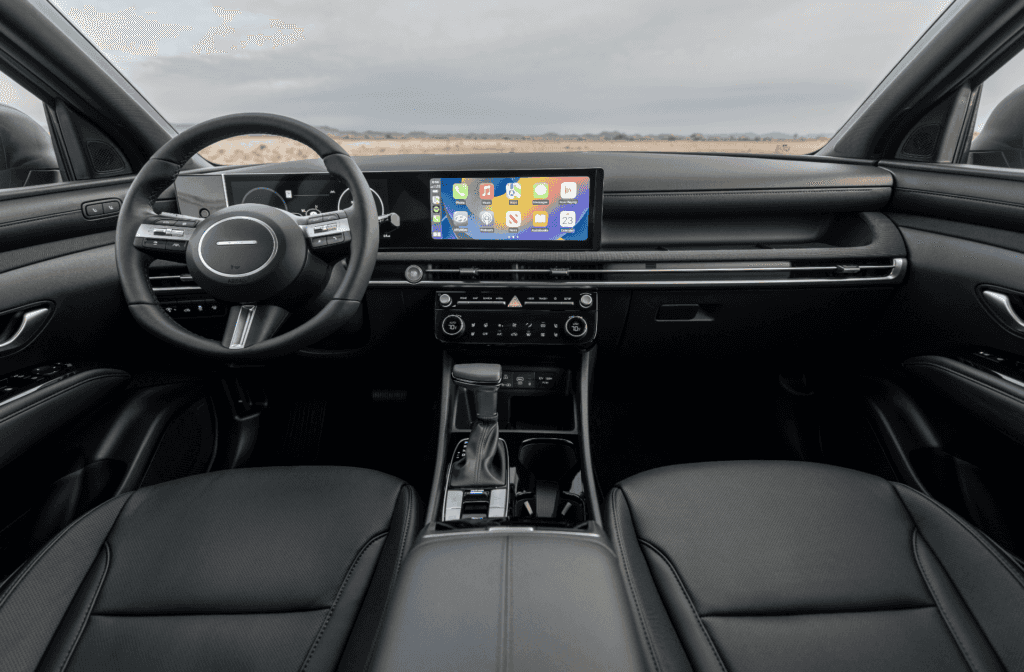
The five-passenger interior is available with cloth, leatherette, or leather-trimmed seating surfaces, depending on trim. Front seating options include a 6-way manual driver seat or an 8-way power-adjustable driver seat with power lumbar support. The top-tier model includes a 6-way power passenger seat, heated and ventilated front seats, and dual-zone automatic climate control with capacitive-touch controls. Rear seating is configured with 60/40 split tip-up lower cushions for optimized cargo flexibility.
Infotainment is delivered through a 12.3-inch touchscreen display with standard audio features or a 12.3-inch Audio-Video-Navigation system available on upper trims. Wireless Apple CarPlay® and Android Auto™ are standard across all configurations. Additional features include SiriusXM® radio, HD Radio™, Dynamic Voice Recognition, front and rear USB Type-C ports, and available wireless device charging up to 15W. Select models include a Bose® Premium Audio System and the Hyundai ccNc infotainment architecture with over-the-air update capability.
Instrumentation and Digital Controls
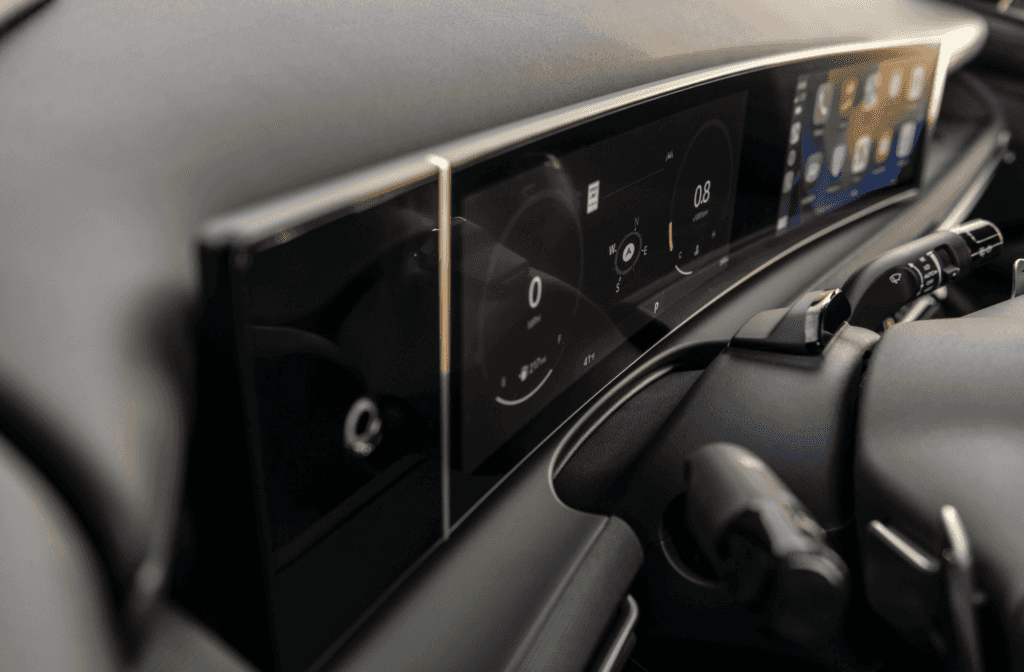
Driver instrumentation ranges from a standard 4.2-inch multi-information display to a 12.3-inch fully digital instrument cluster in higher trims. Metrics displayed include speedometer, tachometer, coolant temperature, fuel level, trip odometer, and gear position. Controls for Bluetooth®, audio, and cruise functions are integrated into a tilt and telescoping steering wheel, with available leather wrapping and heating on upper trims. Illumination adjustments, PRND indicators, and smart cruise control status are also shown on the instrument cluster.
The vehicle supports the Hyundai Bluelink®+ connected services and offers keyless entry with push-button start. Select trims support Digital Key 2 Touch and include a proximity key system with a detachable valet key. Convenience systems extend to auto-dimming rearview mirrors, power windows with auto up/down features, remote engine start, and center console storage with dual cupholders and assist grips.
Dimensional Specifications and Load Capacities
Exterior dimensions include a wheelbase of 118.3 inches and overall length of 195.7 inches or 195.9 inches for the XRT trim. Width stands at 75.0 inches, and height ranges between 66.7 and 66.9 inches, depending on roof equipment. Ground clearance is rated at 8.6 inches with approach, departure, and breakover angles measured at 16.9, 23.2, and 18.6 degrees, respectively. The coefficient of drag is 0.36.
The open bed measures 48.4 inches at the upper length, 52.1 inches at the lower, and extends to 74.8 inches with the tailgate open. Bed width is 53.9 inches max and 42.7 inches between the wheelhouses. Bed depth is 19.2 inches, with a floor height of 31.6 inches and a step height of 18.1 to 25.2 inches.
Curb weight varies from 3,779 to 4,191 pounds, while Gross Vehicle Weight Ratings (GVWR) range from 5,522 to 5,798 pounds. The maximum trailer weight with brakes is 3,500 pounds. Fuel capacity is 17.7 gallons, and oil capacity with filter is 5.8 liters. The tonneau cover accessory track supports a load of up to 440 pounds when evenly distributed.
Active and Passive Safety Components
Standard safety features include advanced dual front airbags, driver and passenger side-impact thorax airbags, side curtain airbags with rollover sensors, and rear side airbags. Seatbelt configurations include three-point systems for all positions with front pretensioners and load limiters. Lower Anchors and Tethers for Children (LATCH) are standard for child seat installation.
Active safety systems include Forward Collision-Avoidance Assist with pedestrian, cyclist, and junction detection, Blind-Spot Collision Warning, Lane Keeping Assist, Lane Following Assist, Driver Attention Warning, and Rear Cross-Traffic Collision-Avoidance Assist. Intelligent Speed Limit Assist, Forward Attention Warning, and Safe Exit Warning are integrated on higher trims. Select models include Blind-Spot View Monitor, Surround View Monitor, Navigation-based Smart Cruise Control, and Highway Driving Assist.
Additional systems include Electronic Stability Control, Vehicle Stability Management, Traction Control, Tire Pressure Monitoring System with individual tire indicators, and rear occupant alert.
Visit ALM Hyundai Lumberton near Fayetteville, NC
Drivers interested in evaluating the mechanical structure and engineering performance of the 2026 Hyundai Santa Cruz can schedule a test drive to experience its responsive turbocharged engine, integrated driver assistance systems, and multifunctional utility features. ALM Hyundai Lumberton near Fayetteville, NC, is available to assist with test drive appointments and technical walkthroughs of the model’s capabilities. The 2026 Hyundai Santa Cruz combines drivetrain precision, intelligent braking, and structural efficiency to support both routine and demanding operational requirements.