

2026 Hyundai Palisade near Raeford, NC
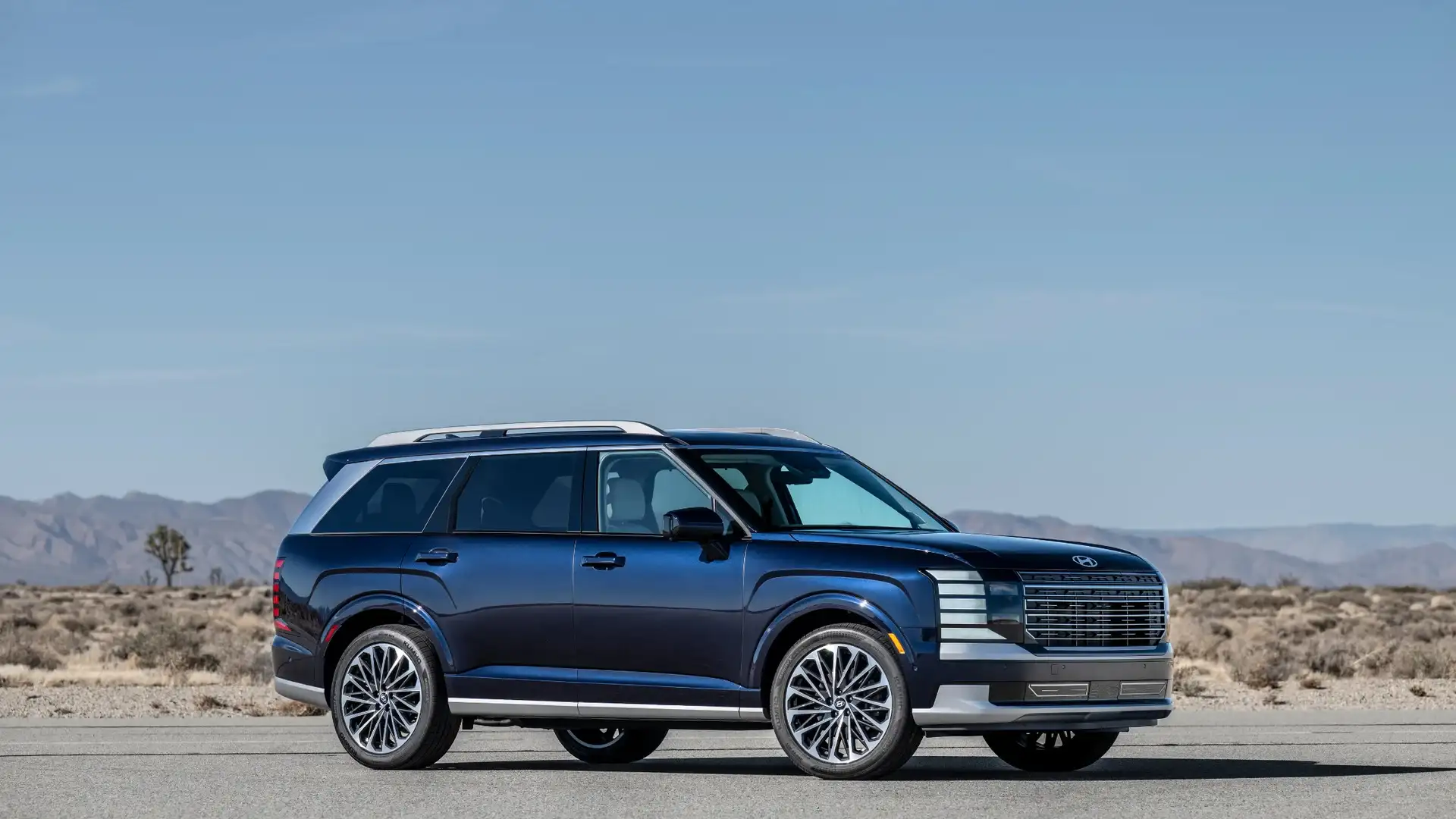
The 2026 Hyundai Palisade is engineered as a three-row sport utility vehicle with multiple powertrain options, a reinforced unibody structure, and a comprehensive set of integrated systems designed to support performance, safety, and occupant functionality. The model introduces both a conventional gasoline engine and a hybrid configuration, each paired with distinct transmission systems and drive configurations. The vehicle maintains consistent mechanical architecture across trims, including standardized braking systems, steering calibration, and suspension geometry. Interior systems focus on multi-row passenger accommodation, digital instrumentation, and connectivity features, while exterior components are configured to support visibility, aerodynamics, and durability. The overall design emphasizes mechanical efficiency, system integration, and adaptability across varying driving conditions.
Powertrain Engineering and Output Specifications
The 2026 Hyundai Palisade offers two engine configurations that differ in structure and output characteristics. The standard internal combustion engine is a 3.5-liter V-type six-cylinder unit with dual overhead camshafts and 24 valves. It uses a combination of multi-point injection and gasoline direct injection systems to optimize combustion efficiency. The engine produces 287 horsepower at 6,400 revolutions per minute and generates 260 pound-feet of torque at 5,000 revolutions per minute. The aluminum block and cylinder head construction reduce overall engine mass while maintaining structural integrity. The compression ratio is set at 12.3 to 1, supporting efficient fuel combustion under varying load conditions.
The hybrid configuration utilizes a 2.5-liter turbocharged inline four-cylinder engine paired with a dual electric motor system. The combined system output reaches 329 horsepower and 339 pound-feet of torque. The electric motors contribute additional torque at lower engine speeds, with one motor producing 75 pound-feet and another delivering 195 pound-feet at specified operating ranges. The hybrid system operates on a lithium-ion battery with a 300-volt architecture and a capacity of 1.65 kilowatt-hours. This configuration supports improved torque distribution and energy efficiency without altering the vehicle’s structural layout. Both powertrains operate on regular unleaded fuel and incorporate Idle Stop and Go functionality to reduce fuel consumption during stationary operation.
Transmission Systems and Drive Configurations
The transmission systems in the 2026 Hyundai Palisade are designed to complement the respective engine configurations. The 3.5-liter V6 engine is paired with an 8-speed automatic transmission, which provides a wide range of gear ratios for improved acceleration and highway efficiency. Gear ratios are calibrated to balance torque delivery and fuel consumption, with a final drive ratio of 3.510 for front-wheel drive models and 3.648 for all-wheel drive variants.
The hybrid model uses a 6-speed automatic transmission integrated with electric motor assistance. This system enables coordinated operation between the combustion engine and electric motors, allowing for smooth transitions between power sources. The final drive ratio for the hybrid configuration is 3.759 for both front-wheel drive and all-wheel drive systems.
Front-wheel drive is standard across configurations, while an active on-demand all-wheel drive system is available. This system adjusts torque distribution between the front and rear axles based on traction conditions. Drive Mode Select allows drivers to choose between Eco, Sport, and My Drive settings, which modify throttle response and transmission behavior. Terrain Mode Select is available on all-wheel drive models and includes dedicated settings for mud, snow, and sand conditions. A Tow Mode is also included to support stability during towing operations.
Chassis Construction, Suspension Geometry, and Steering Calibration
The 2026 Hyundai Palisade uses a unibody chassis constructed primarily from high-strength steel. This design improves structural rigidity while maintaining a controlled weight profile. The front suspension system uses a MacPherson® strut configuration with coil springs and a stabilizer bar. The rear suspension features a multi-link independent setup with separated springs and shock absorbers, along with a self-leveling function that maintains ride height under varying load conditions.
Steering is managed by a motor-driven power steering system with a column-mounted rack-and-pinion configuration. The steering ratio is set at 14.3 to 1 for standard models, with a reduced ratio of 13.3 to 1 for the XRT PRO trim. The system provides consistent steering feedback and requires approximately 2.8 turns from lock to lock. The turning diameter is measured at approximately 39.2 feet, supporting maneuverability in confined environments.
Braking performance is supported by ventilated front disc brakes with a diameter of 345 millimeters and solid rear disc brakes measuring 325 millimeters. The braking system includes anti-lock braking, electronic brake-force distribution, and brake assist. Additional control systems include Hillstart Assist Control and Downhill Brake Control, which assist in maintaining vehicle stability during incline and descent conditions. The parking brake is electronically controlled and includes an auto-hold function.
Exterior Systems and Functional Design Elements
Exterior components of the 2026 Hyundai Palisade are configured to support visibility, durability, and operational convenience. Standard lighting systems include LED projector headlights, daytime running lights, and rear combination lamps. High Beam Assist automatically adjusts headlight intensity based on surrounding traffic conditions.
Wheel configurations range from 18-inch to 21-inch alloy designs, depending on trim level. Tire specifications vary to support both standard driving and all-terrain applications. Exterior mirrors are equipped with heating functionality and optional power-folding capability with auto-dimming features. Integrated turn signal indicators improve visibility during lane changes.
Glass components include solar front glass, privacy glass for rear occupants, and acoustic glass in select trims to reduce cabin noise. Windshield wipers include a variable intermittent system, with rain-sensing functionality available on higher trims. Additional features include a hands-free smart liftgate with adjustable height settings and an integrated rear spoiler with a high-mounted stop lamp. Roof rails and optional crossbars support cargo carrying capability, while a trailering package includes pre-wiring and cooling enhancements for towing applications.
Interior Configuration, Seating Systems, and Climate Control
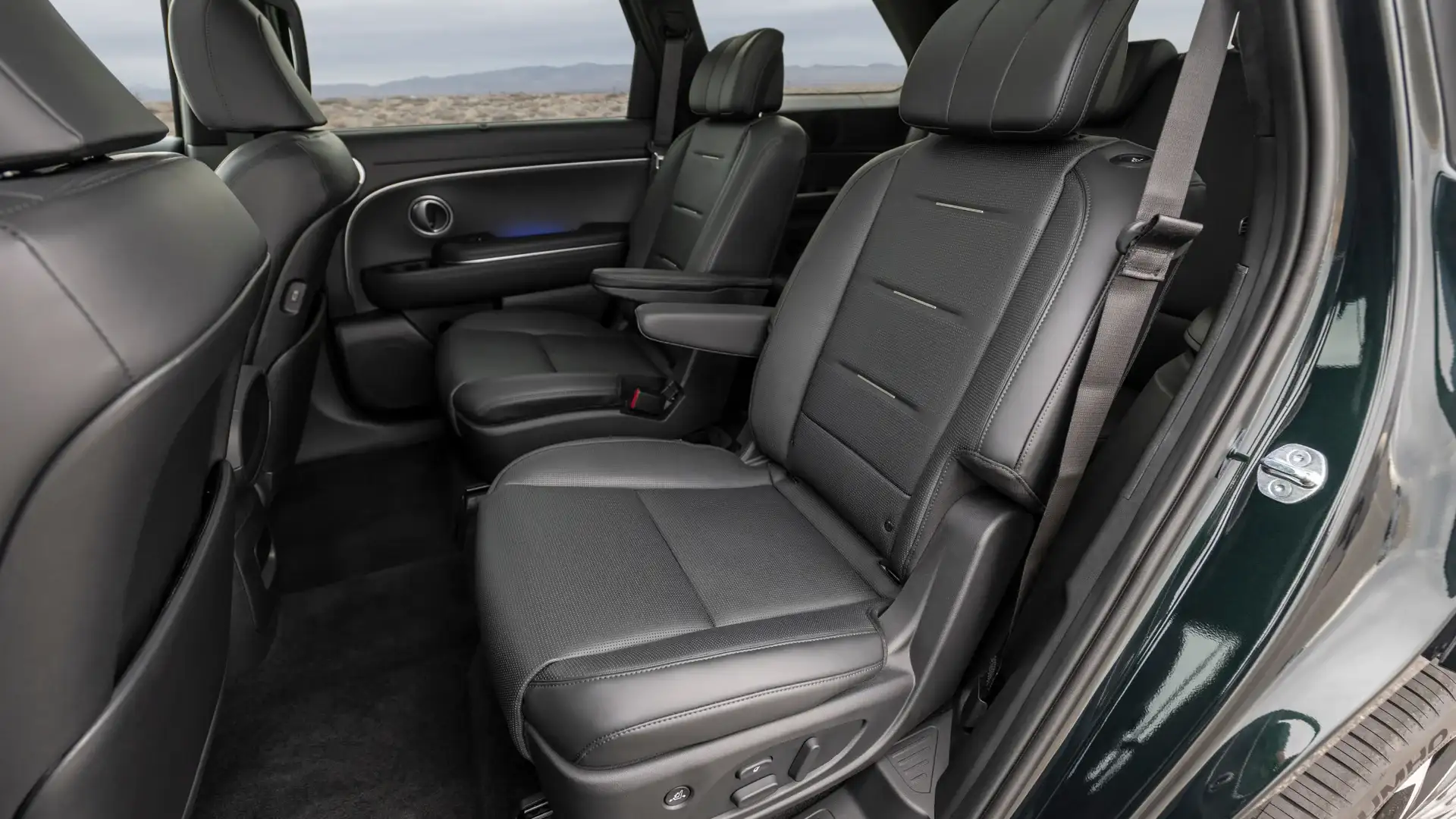
The interior of the 2026 Hyundai Palisade is designed to accommodate either seven or eight passengers, depending on seating configuration. Material options include cloth, synthetic leather, leather-trimmed seating surfaces, and premium Nappa leather. Front seats offer multiple adjustment configurations, including 6-way manual and 8-way power adjustments. Lumbar support options vary between two-way and four-way systems.
Heating and ventilation functions are available for both front and second-row seats. Higher trims include additional features such as Ergo-Motion seating and leg cushion extensions. The second row offers sliding and reclining functionality, along with optional captain’s chairs. The third row includes split-fold seating with available power folding, reclining, and sliding capabilities.
The climate control system uses a three-zone automatic configuration with independent controls for front and rear passengers. The system includes rear air vents, a cabin air filter, and automatic defogging functionality. Rear occupants have access to dedicated climate controls, ensuring consistent airflow distribution across all seating rows.
Integrated Technology, Connectivity, and Driver Interface
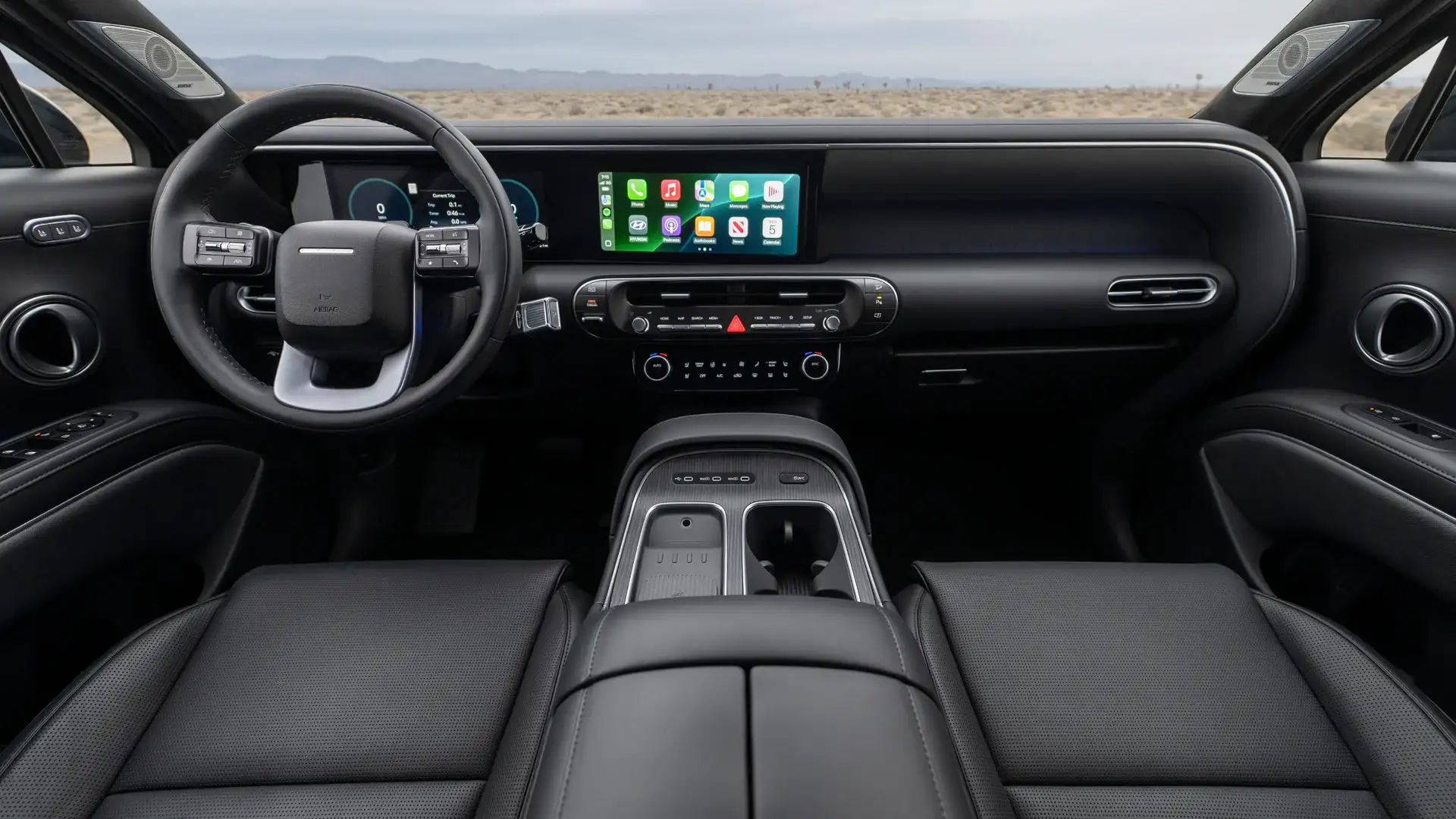
The 2026 Hyundai Palisade incorporates a centralized digital interface anchored by a 12.3-inch touchscreen display. This system includes onboard navigation and supports wireless smartphone integration through Apple CarPlay® and Android Auto™. The audio system can be upgraded to a Bose® 14-speaker configuration with enhanced sound processing capabilities.
Additional technology features include a head-up display, a built-in dash camera system, and wireless device charging with a 15-watt output. Multiple USB-C ports are distributed across all seating rows, supporting simultaneous device charging. The vehicle also supports a Wi-Fi hotspot and over-the-air software updates.
Driver interface systems include a digital instrument cluster and a multi-information display. Smart cruise control with stop-and-go functionality uses navigation data to adjust speed based on road curvature. Remote Smart Parking Assist enables automated parking maneuvers under controlled conditions. The system integrates with proximity key entry and push-button start functionality.
Safety Systems and Driver Assistance Technologies
The safety architecture of the 2026 Hyundai Palisade includes both passive and active systems. Passive safety components include multiple airbags, including front, side-impact, curtain, and driver knee airbags. Seatbelt systems include pretensioners and load limiters across multiple seating positions. Structural elements such as front crumple zones and reinforced body panels are designed to absorb and distribute impact forces.
Active safety systems include Forward Collision-Avoidance Assist with detection for vehicles, pedestrians, and cyclists. Lane Keeping Assist and Lane Following Assist 2 provide steering input to maintain lane positioning. Driver Attention Warning monitors driver behavior and provides alerts when irregular patterns are detected.
Blind-Spot Collision Warning and Rear Cross-Traffic Collision-Avoidance Assist provide monitoring during lane changes and reversing maneuvers. Parking Distance Warning systems use sensors to detect obstacles during low-speed operation. Highway Driving Assist supports controlled driving on highways by combining adaptive cruise control with lane-centering functions. Intelligent Speed Limit Assist uses camera-based recognition to adjust vehicle speed in accordance with posted limits.
Dimensions, Cargo Management, and Utility Systems
The 2026 Hyundai Palisade is built on a wheelbase of 116.9 inches, providing a stable platform for passenger comfort and cargo distribution. The overall length approaches 199.2 inches, depending on trim configuration. The width measures 78.0 inches, and the height is approximately 69.5 inches.
Cargo management systems include fold-flat seating configurations and an underfloor storage compartment in the rear cargo area. The power liftgate system allows adjustable height settings for improved accessibility. Interior storage solutions include multiple cupholders, door pockets, and center console compartments.
The vehicle includes a trailer sway control system as part of its towing support features. Additional towing-related systems include pre-wiring and enhanced cooling components to maintain system performance during load conditions.
Schedule a Test Ride Today
Drivers interested in examining the technical capabilities of the 2026 Hyundai Palisade can arrange a visit at ALM Hyundai Lumberton near Raeford, NC. A scheduled test drive provides the opportunity to evaluate engine output, transmission behavior, and all-wheel drive functionality under controlled conditions. Interior systems such as the digital interface, seating configurations, and climate controls can be assessed directly during operation. Safety and driver assistance technologies can also be observed in active driving scenarios. Contact the dealership to arrange a test drive and review the vehicle’s full range of technical features in person.