

2026 Hyundai IONIQ 9 near Raeford, NC
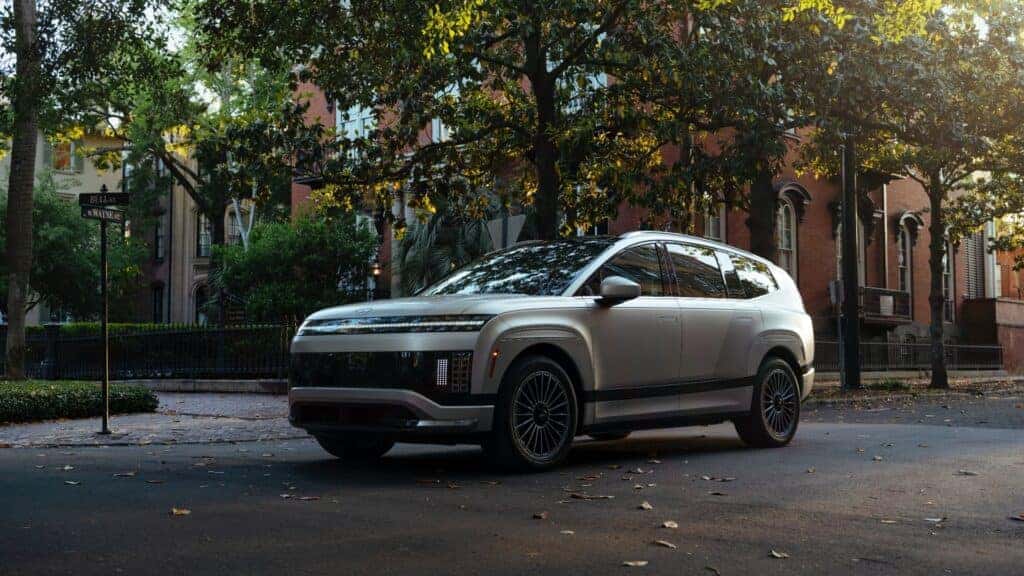
The 2026 Hyundai IONIQ 9 is a full-size, three-row electric SUV engineered on a dedicated battery-electric platform designed to support high energy capacity, long driving range, and multiple drivetrain configurations. The vehicle architecture prioritizes structural rigidity, optimized weight distribution, and efficient packaging to accommodate a large battery system without compromising interior space. A unibody construction utilizing advanced high-strength steel and high-tensile steel reinforces the body structure while supporting safety performance and ride stability. Exterior dimensions reflect its role as a spacious utility vehicle, with a long wheelbase that contributes to interior legroom and predictable handling characteristics.
Electric Drivetrain Configurations and Output Specifications
The 2026 Hyundai IONIQ 9 is available in rear-wheel-drive and all-wheel-drive layouts, each powered by permanent-magnet synchronous electric motors. The rear-wheel-drive configuration delivers a maximum output of 160 kilowatts, equivalent to 215 horsepower, with peak torque measured at 350 newton-meters. This setup emphasizes efficiency and extended driving range while maintaining consistent power delivery under varying load conditions.
The all-wheel-drive configurations employ dual electric motors, increasing total system output to 226.1 kilowatts, or 303 horsepower, in the standard AWD setup, and up to 314.6 kilowatts, or 422 horsepower, in the higher-output AWD variant. Torque output for these configurations reaches 605 newton-meters and 700 newton-meters, respectively, supporting strong acceleration and enhanced traction. Power is managed through a single-speed reduction gear transmission with shift-by-wire operation, reducing mechanical complexity while ensuring smooth and immediate response to driver input.
Drive Modes and Power Management Control
Drive Mode Select functionality allows adjustment of vehicle behavior across Eco, Normal, Sport, Snow, and customizable My Mode settings. Each mode alters throttle response, steering assist, and traction control parameters to suit different driving conditions. Eco mode prioritizes energy efficiency and range optimization, while Sport mode sharpens response for more dynamic driving. Snow mode modifies torque distribution and stability control to improve traction on low-grip surfaces. The My Mode setting enables drivers to tailor system responses based on personal preference.
High-Voltage Battery System and Energy Capacity
All variants of the 2026 Hyundai IONIQ 9 are equipped with a 110.3 kilowatt-hour lithium-ion battery operating at 610 volts. This high-voltage system supports extended driving range and rapid charging capability. Rear-wheel-drive models achieve an estimated driving range of up to 335 miles on a full charge, while all-wheel-drive versions provide estimated ranges of 320 miles and 311 miles depending on output level.
The battery system incorporates an integrated heating and preconditioning function to regulate temperature during charging and driving. This system improves charging consistency in cold environments and helps maintain overall battery efficiency. Battery placement within the chassis contributes to a low center of gravity, supporting stable handling and balanced weight distribution.
Disclaimer: EPA-estimated 335-mile driving range for 2026 IONIQ 9 S trim; EPA-estimated 320-mile driving range for SE and SEL trims; EPA-estimated 311-mile driving range for Limited, Calligraphy, and Calligraphy Design trims. Figures are EPA estimates and based on a fully charged battery. For comparison purposes only. Battery capacity decreases with time and use. Actual range will vary based on a number of factors, including vehicle options, driving conditions and habits, vehicle and battery’s condition, battery temperature and outside temperature.
Charging Compatibility and Recharging Performance
The 2026 Hyundai IONIQ 9 supports multiple charging methods, including AC Level 2 and DC fast charging. Using a 240-volt, 48-amp AC Level 2 charger, the battery can be replenished from 10 percent to 80 percent capacity in approximately nine hours and forty minutes. For faster charging, the vehicle is equipped with a North American Charging Standard port positioned on the rear passenger-side quarter panel.
When connected to a 350 kilowatt DC fast charger using a CCS adapter, the battery can charge from 10 percent to 80 percent in approximately 24 minutes. Lower-output DC fast charging options are also supported, though charging times increase accordingly. An included dual-voltage charging cable provides additional flexibility for home or portable charging solutions.
Disclaimer: Approximately 24 minutes to charge from 10% to 80% on a 350-kW, 800V DC ultra-fast charger using the CCS adapter included with the 2026 IONIQ 9. Actual charging time varies based on a number of factors, including current battery charge level, output of the charging unit, vehicle and battery settings, battery temperature and outside temperature. Ultra-fast charging stations are provided by independent companies and availability is not guaranteed.
Steering, Suspension, and Braking Systems
The steering system uses a rack-and-pinion configuration with motor-driven power assist mounted directly to the rack. This setup provides consistent steering feedback and precise control. The steering ratio measures 16.02, with a lock-to-lock rotation of 2.93 turns and a curb-to-curb turning diameter of 41 feet.
Suspension design consists of a MacPherson® strut layout in the front and a multi-link five-link arrangement in the rear. Both systems utilize gas dampers to balance ride comfort with body control. Braking hardware includes ventilated disc brakes on all four wheels, with front discs measuring 360 millimeters and rear discs measuring 345 millimeters in diameter. An active hydraulic brake booster integrates regenerative braking with traditional friction braking, allowing energy recovery during deceleration while maintaining predictable pedal feel. Regenerative braking levels can be adjusted using steering-wheel-mounted control paddles.
Exterior Design Efficiency and Functional Elements
The exterior design emphasizes aerodynamic efficiency, with a coefficient of drag as low as 0.269. Active air flaps in the lower front grille regulate airflow based on cooling demand and driving conditions. Flush-type door handles reduce drag and automatically deploy during vehicle access.
Wheel options range from 19-inch to 21-inch alloy designs paired with tire sizes selected for ride comfort and stability. Full LED lighting is standard, including daytime running lights, projector headlights with automatic operation, high beam assist, taillights, and a center high-mount stop lamp. Additional exterior features include a panoramic sunroof on select trims, roof side rails, an integrated rear spoiler, rain-sensing windshield wipers, and a power-operated liftgate with automatic open functionality.
Interior Layout, Seating Capacity, and Materials
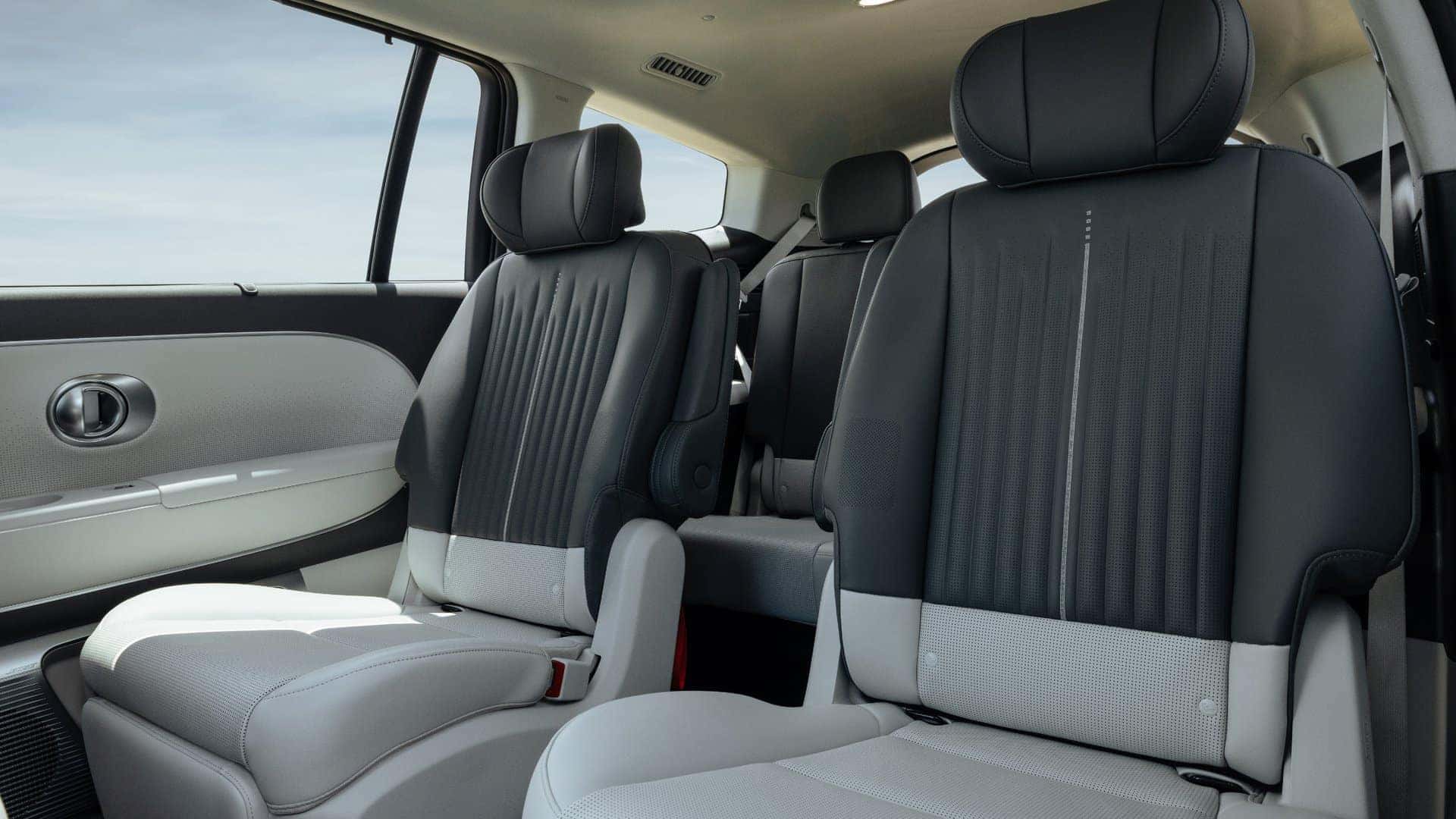
The interior of the 2026 Hyundai IONIQ 9 is configured to accommodate six or seven occupants depending on the seating arrangement. Seating surfaces range from stain-resistant cloth to H-Tex® trimmed materials across trim levels. Front seats feature power adjustment, lumbar support, and heating as standard, with ventilation available on higher trims.
Second-row seating options include a sliding bench seat or power-adjustable captain’s chairs with leg rests and one-touch walk-in functionality. Third-row seating can be manually operated or power folding, depending on configuration. Interior space measurements reflect a total interior volume of 185.4 cubic feet, with a passenger volume of 163.5 cubic feet in seven-passenger layouts. Cargo capacity reaches up to 86.9 cubic feet behind the first row, with multiple configurations available for mixed passenger and cargo use.
Digital Displays and Infotainment Integration
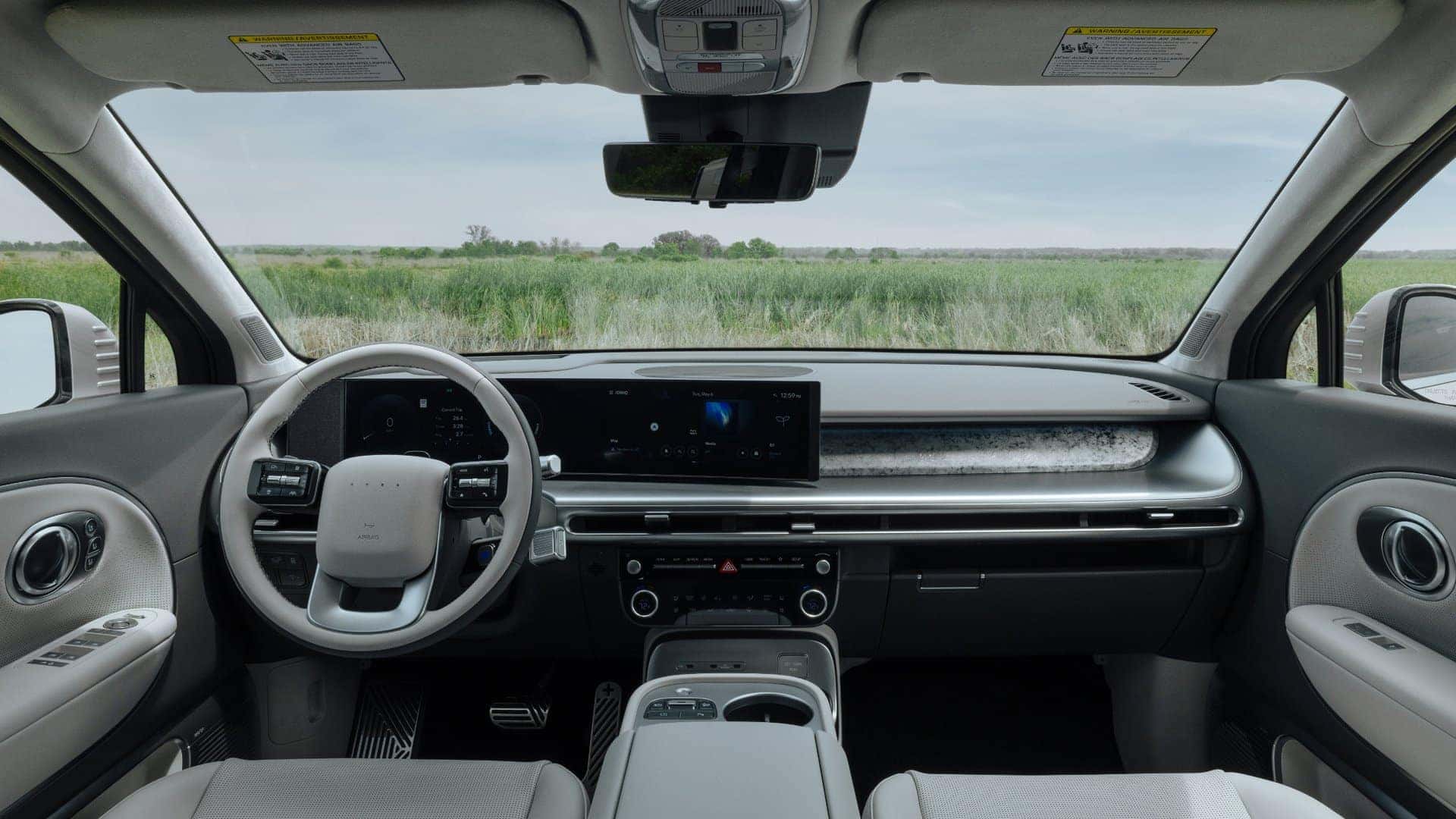
The dashboard integrates a 12.3-inch digital instrument cluster paired with a 12.3-inch navigation and infotainment display. This system supports over-the-air updates, HD Radio™, satellite radio, and built-in Wi-Fi hotspot capability. Wireless Apple CarPlay® and Android Auto™ are standard, allowing cable-free smartphone integration.
Audio output is delivered through a standard multi-speaker system, with a Bose® premium audio system available on higher trims. Seven USB-C ports are distributed across all three rows to support device charging and connectivity. A wireless charging pad is included to reduce reliance on physical cables within the cabin.
Climate Control, Cabin Acoustics, and Driver Information
The climate control system features dual automatic temperature control for the front row, with independent automatic climate functionality for the second row. Air vents are provided for all three rows to maintain consistent airflow. A heat pump is standard, improving heating efficiency and reducing energy consumption in colder conditions.
Acoustic laminated glass is used for the windshield and front side windows to reduce exterior noise intrusion. Driver information displays include charge level, power usage, regenerative braking status, drive mode selection, and advanced driver assistance system indicators. A head-up display is available on select trims, projecting key information directly into the driver’s field of view.
Advanced Safety Systems and Driver Assistance Technologies
Safety and driver assistance systems are standard across the 2026 Hyundai IONIQ 9 lineup. These include forward collision-avoidance assist with detection for vehicles, pedestrians, cyclists, and intersection scenarios. Lane keeping assist and lane following assist support consistent lane positioning, while blind-spot collision-avoidance assist and rear cross-traffic collision-avoidance assist enhance awareness during lane changes and reversing maneuvers.
Additional systems include highway driving assist with adaptive cruise control, driver attention warning, intelligent speed limit assist, and advanced rear occupant alert using radar-based detection. Higher trims add surround-view monitoring, blind-spot view monitoring, parking collision-avoidance assist, and remote smart parking assist for controlled low-speed maneuvering in tight spaces.
Visit ALM Hyundai Lumberton near Raeford, NC
Drivers interested in understanding how the 2026 Hyundai IONIQ 9 performs in everyday conditions are encouraged to schedule a test drive and evaluate its electric power delivery, regenerative braking control, and digital interface functionality. A test drive provides an opportunity to experience the balance between driving range, acceleration, and cabin refinement firsthand. ALM Hyundai Lumberton near Raeford, NC, offers access to this model for detailed evaluation of its safety technologies, seating configurations, and charging capabilities. Exploring these features in motion allows a clearer understanding of how the 2026 Hyundai IONIQ 9 supports daily driving, longer trips, and multi-passenger transport within a fully electric platform.