

2026 Hyundai IONIQ 9 in Lumberton, NC

The 2026 Hyundai IONIQ 9 is a fully electric, three-row SUV developed on Hyundai’s Electric Global Modular Platform (E-GMP). The model advances Hyundai’s EV strategy through a combination of extended driving range, multi-motor configurations, fast charging capabilities, and a flexible interior layout suited for both daily commutes and long-distance travel. Every technical element has been designed to align with the requirements of large families or professional users who prioritize space, efficiency, and digital integration.
Technical Drive Configurations and Battery System
The 2026 Hyundai IONIQ 9 offers three available drivetrain formats that rely on the same 110.3 kWh NCM lithium-ion battery. These options include a single-motor rear-wheel-drive (RWD) system and two dual-motor all-wheel-drive (AWD) variants. The RWD layout features a 160 kW motor that produces approximately 215 horsepower and 258 lb-ft of torque.
The dual-motor AWD system raises combined power output. The standard AWD variant delivers 313 horsepower and 446 lb-ft of torque. The performance-focused AWD model produces 429 horsepower and up to 516 lb-ft of torque, achieving 0 to 62 miles per hour in approximately 5.2 seconds.
All powertrain formats benefit from the same 800V architecture that supports fast DC charging. Under optimal conditions and when connected to a 350 kW high-power charger, the vehicle can charge from 10 percent to 80 percent in roughly 24 minutes. It also supports 400V charging without additional components by using a motor and inverter to boost voltage levels internally. The 2026 Hyundai IONIQ 9 includes a North American Charging Standard (NACS) port and an adapter, offering compatibility with Tesla Supercharger stations and other charging networks.
Integrated Aerodynamics and Chassis Efficiency
The platform’s structural layout improves handling and stability by distributing the battery mass evenly across the base of the chassis. The independent front and rear suspension systems contribute to ride comfort without compromising cornering behavior, and regenerative braking allows energy recovery while improving deceleration control.
Interior Configuration and Modular Seating Design
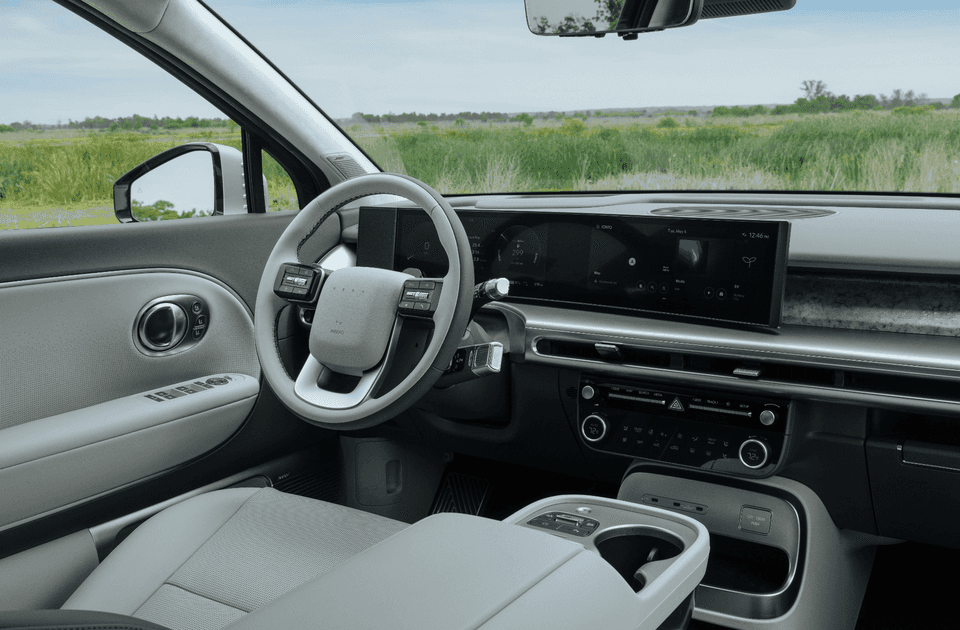
Inside the 2026 Hyundai IONIQ 9, Hyundai has built a cabin that prioritizes flexibility. The flat floor layout is made possible by the skateboard-type battery arrangement. This layout supports either a six- or seven-seat configuration, with second-row captain’s chairs or a bench seat available based on selected trim levels.
Both first- and second-row seats offer optional “Relaxation” functionality. This includes power recline features and leg rest extensions. In specific trims, the second-row seats can swivel to face the third row, allowing for face-to-face passenger interaction while the vehicle is parked.
Storage capacity is increased through fold-flat rear seats and a rear cargo area designed to accommodate bulkier items. Multiple USB-C charging ports are available throughout the cabin, and a vehicle-to-load (V2L) feature allows power to be supplied to external electronics using the battery system.
Connectivity and Driver Interface Technology
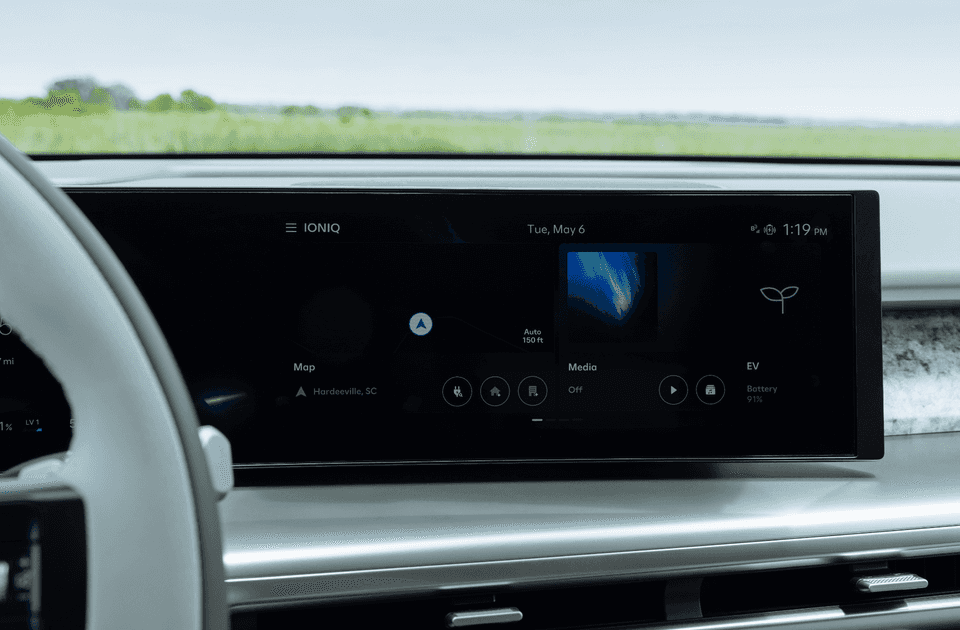
Hyundai’s approach to digital interaction is centered around the Connected Car Navigation Cockpit (ccNC), which includes dual 12.3-inch screens for instrument readouts and infotainment control. A separate 6-inch climate touchscreen is positioned for HVAC adjustments. The user interface supports multiple profiles, over-the-air software updates, and a built-in app store that enables personalization of infotainment content and third-party applications.
The 2026 Hyundai IONIQ 9 also includes a head-up display (HUD) that projects information such as speed, navigation, and alerts onto the windshield. Wireless Android Auto™ and Apple CarPlay® are supported, along with Bluetooth® connectivity for two devices simultaneously. Digital Key 2.0 is available and uses ultra-wideband technology to allow smartphone-based vehicle access and ignition.
Advanced voice recognition is built into the system and supports common in-vehicle commands. A built-in virtual assistant allows interaction with navigation, climate, and media systems using natural language, reducing the need for manual input while driving.
Driver Assistance and Safety Framework
The 2026 Hyundai IONIQ 9 includes a full suite of active and passive safety technologies. Hyundai’s SmartSense system integrates features such as Forward Collision Avoidance Assist, Blind-Spot View Monitor, Highway Driving Assist, and Smart Cruise Control with machine learning-based driving style adaptation.
Highway Driving Assist 2 provides semi-autonomous lane centering and following, along with automated lane change support when the driver activates the turn signal. Surround View Monitor offers a 360-degree camera perspective to aid in tight maneuvering or parking, and Remote Smart Parking Assist allows the vehicle to move into or out of a parking space using the key fob or smartphone app.
The structural layout of the vehicle has been engineered for collision energy absorption, with extensive use of high-strength steel and a multi-load path frame design. This reduces deformation during impact events and enhances passenger protection. The airbag system covers all seating rows and includes side-curtain airbags to protect third-row occupants.
Software Integration and Charging Network Compatibility
The 2026 Hyundai IONIQ 9 is capable of receiving continuous system updates via its over-the-air (OTA) update platform. This includes firmware upgrades for driving assistance functions, infotainment systems, and battery management protocols.
The inclusion of an NACS connector extends this access to include the Tesla Supercharger network, which is being expanded through cooperative agreements. An included adapter provides charging interoperability with CCS-standard equipment. Hyundai’s navigation system is integrated with real-time charger availability and can route users to the nearest compatible charging location based on battery state.
Visit ALM Hyundai Lumberton in Lumberton, NC
The 2026 Hyundai IONIQ 9 provides utility, range, and passenger volume in a fully electric format. It applies structural, software, and hardware engineering solutions to support consistent, high-usage applications. It features a 110.3 kWh battery system, multi-motor AWD configurations, an E-GMP chassis layout, and high-speed charging capabilities. It combines these with a digitally integrated cockpit and advanced driver assistance systems. Drivers can explore this combination of engineering and functionality by scheduling a test drive. Visit ALM Hyundai Lumberton in Lumberton, NC, to experience how this model meets the practical demands of modern electric mobility.